
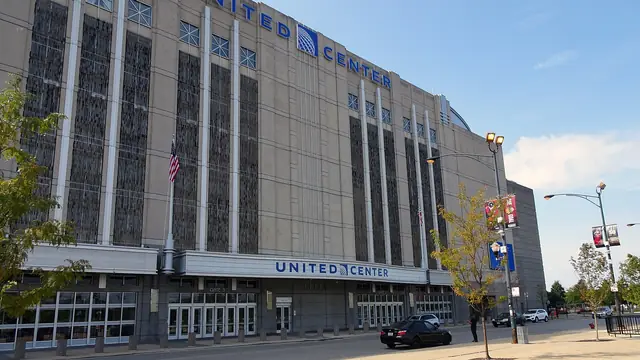
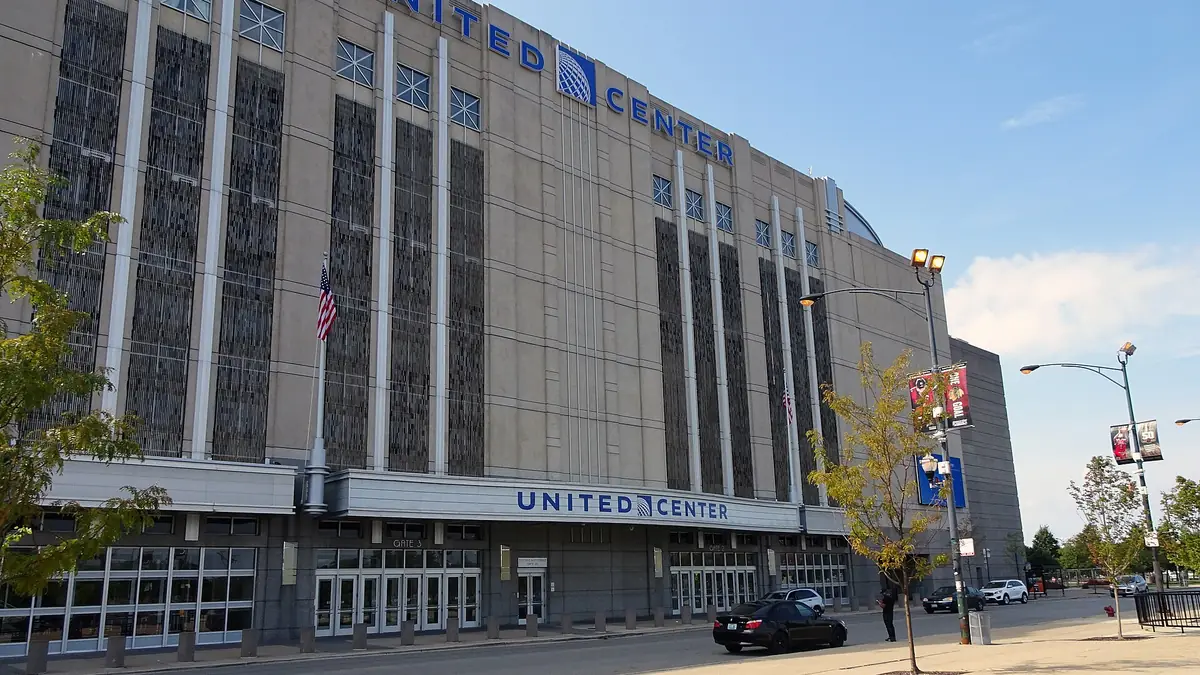

Parking, bag policy, transit and history are on the main United Center guide.
Three quick picks at the United Center
Here is the decision in brief. For a Chicago Bulls game, sit on the sideline of the 100 level near center court. For a Chicago Blackhawks game, the 200-level club ring is the seat to beat. On a budget for either sport, buy the first few rows of a center 300-level section.
The bowl has three rings, and their depth is unusually uniform, which makes comparing listings easier than at most arenas. Two independent seating guides, TickPick and RateYourSeats, agree on these counts:
- 100 level (lower bowl): a standard section runs 19 numbered rows.
- 200 level (club ring): 8 rows.
- 300 level (upper deck): about 17 rows, with standing room behind the last row.
The arena posts four maps (Bulls, Blackhawks, a concert with a seated floor, and a concert with a standing floor) and cautions that layouts can differ from event to event.
Where row 1 really is
Most lower-bowl sections start at row 1 and climb to row 19. The end sections are different. In 105 through 107 and 116 through 118, a block of lettered rows comes before row 1. Both guides confirm this; one lists the letters as A through M, the other shows A through K for section 117. In either case, row 1 at the ends is more than ten rows off the floor, so a lettered seat there is the closer one.
- Seat order: numbering begins at the right-hand aisle (facing the action), the side that borders the next-lower section number, according to both guides.
- Aisles: the first and last seat numbers in a row are the two aisle seats.
- Hockey glass: the dasher boards and glass can hide parts of the ice from low lower-bowl rows, per one guide, and another warns about glass in front rows behind the nets. From about row 10 up, you see over it.
Matching the seat to Bulls or Blackhawks
Bulls
The classic view is a lower-bowl sideline seat near center court. Corners on the 100 level are a fair middle ground. The baseline blocks (105–107 and 116–118) give a great look at one basket and a poor one at the other. Seats right behind the team benches are close, but players and staff on their feet can block the floor.
Blackhawks
Hockey rewards height. The club ring and mid-height rows at center ice let you see the full sheet. TickPick and RateYourSeats both name the section 117 end as the one Chicago attacks in periods one and three. Sit there, low or high, and the home team comes toward you for most of the game. Seats behind the penalty boxes share the bench problem: people standing in front of you.
Either sport
A front-row seat at center upstairs typically beats a deep 100-level seat behind a net or hoop.
The club ring and premium options
The 200 level is short on purpose: only eight rows deep, with its own concourse and servers who bring food and drinks to your seat on Bulls and Blackhawks nights. Perched right over the lower bowl, each row stays near the action while giving enough height to see a play take shape, a combination hockey fans love.
As of 2026, the arena's premium seating page names these products:
- BMO Club: assigned club seating where dining is included, plus lounge access.
- Michelob Ultra Club Theater Box: four people, one private box, chef's-table food.
- Banner Seats and Banner Lofts: extra-wide chairs and partly private lofts high above the floor.
- Suites: several tiers (Lower Level, Club Level, Banner, Icon, Super) and a group suite branded FanDuel.
Sponsor names change. A resale club ticket should say what lounge or food access it includes; if it is silent, assume nothing extra comes with it.
Upper deck value and the seats to skip
The 300 level gives you the whole surface for far less than the lower bowl, as long as you stay low and central. Here is how it ranks:
- Low rows, center 300s: the strongest view for the money in the building, for both sports.
- Corner 300s: fine for hockey, where the diagonal still covers the rink.
- High rows at the ends: the most distant seats in the arena. Skip them unless price is the only factor.
- Standing room: a ticket without a chair, used in the space behind the upper deck.
Other seats that tend to disappoint: low rows behind each goal for hockey, seats directly behind the benches or penalty boxes, and the baseline blocks for basketball if you care about the far end. One practical note on section 325: it houses an accessible ticket window and is one of the ways into the sensory room.
Concert maps: reserved floor or GA
The arena posts two concert maps, one with numbered floor seats and one with a general admission floor. For end-stage tours, both seating guides put the stage at the end with 116 through 118, and one says roughly ten rows come out to fit it. That end is mostly behind or next to the stage, so its seats are either pulled or marked limited view.
- Straight-on: the far end, roughly 105 through 107, looks directly at the stage across the floor.
- Angled and closer: side seats in the 100s and 200s, on the half of the building nearest the stage, give the best mix.
- Reserved floor: flat, so the people ahead decide what you see.
- GA floor: no assigned spot; arrive early if you want the front.
Staging changes from tour to tour, so confirm which floor map your listing uses before you buy. Every Reserved Seat order is backed by a 100% guarantee.
Wheelchair seats and sensory support
The arena says every level has wheelchair spaces paired with a companion seat, as availability allows. According to seating guides, you will usually find them in the back row of a section where it meets the concourse, with a folding chair for the companion.
- Buying options: phone (312) 455-4657, visit the Gate 4 Box Office in person, or stop at the wheelchair-accessible window by section 325.
- Elevators: you will find them beside Gate 3 and beside Gate 7.
- Sensory room: certified as sensory-inclusive and located near Gate 2 1/2. Ask Guest Relations (Gates 2 and 6, or sections 221 and 325) for entry, and for a sensory bag with noise-reducing headphones.
Current details are in the arena's accessibility guide. On the resale market, buy only listings clearly marked as wheelchair or accessible seating.
Frequently asked questions
Why does row 1 look far away in some United Center sections?
At the two ends (105–107 and 116–118), rows with letters come first, pushing row 1 more than ten rows back. Choose a lettered row there if you want to be close.
Which United Center seats are best for a Blackhawks game?
The club ring upstairs from the lower bowl, and mid-height rows at center in the 100s, show the full ice. In the lower bowl, aim for row 10 or higher to clear the glass.
Where is seat 1 in a United Center section?
Look toward the court or ice: seat 1 is the aisle seat on your right, bordering the section with the smaller number. Two guides confirm it.
Where is the stage for an end-stage concert at the United Center?
Seating guides put it at the 116–118 end. Seats there mostly sit behind or beside the stage, while the far end looks straight at it.
Does the United Center sell standing room?
For some events, yes. Those tickets come with no chair; holders stand in the area behind the top of the upper deck.
Is there a sensory room at the United Center?
Yes, close to Gate 2 1/2. Guest Relations staff grant access, and they also lend sensory bags.