







Courtside to the upper deck: choosing your angle
Aim for a sideline seat in the lower bowl, somewhere around rows 8 to 20. At that height you can watch screens, cuts and help defense unfold over the heads of the bench, and the court still feels close. Because a basketball arena is small compared with a football or baseball stadium, nearly every ticket puts you nearer the play than its counterpart in those sports. The choice that really matters is your angle to the court and how high you sit.
- Courtside (chairs right on the floor beside the sideline): the priciest seats in any arena. You are inches from the players, but at eye level the far half of the court flattens out.
- Baseline seats in the lower bowl: a lower price than the sideline, at the cost of depth perception, and the basket's support structure, called the stanchion, can sit in front of the first few rows. If you choose this end, pick the basket the home team attacks after halftime, so the final minutes happen in front of you.
- Front rows of the upper level at midcourt: frequently smarter than a low corner, because you see all ten players and the spacing much as television shows them.
The arena guides list each building's sections, premium clubs and rows to skip.
Picking the night: visitors, weekends and the stretch run
Each franchise hosts 41 regular-season games, far more than an NFL club's handful of home Sundays and half of baseball's home schedule. With that much inventory, the opponent and the stakes decide whether a night is hot or quiet.
- Big-name visitors: when Golden State, Boston, New York or the Lakers come to town, prices rise, and their fans turn up in visible numbers. Championship history plays a part; Boston's 18 titles are the most in the league, one more than the Lakers' 17.
- Rivalries: Boston against Los Angeles, New York against Boston, and the Lakers against the Clippers in a shared city all sell reliably, along with late-season division games in a close race.
- Weekends and Christmas: the end of the week beats its start. Christmas Day games, a league tradition dating to 1947, feature the marquee teams and stars.
- Opening night and the final two months: a home opener or a March game with playoff seeding at stake outsells a random weeknight in January.
- International dates: for 2026–27, the league scheduled a November regular-season game in Mexico City and January games in Paris and Manchester, sold separately in those markets.
The softest dates are midweek meetings between two teams with nothing to play for, particularly in February. If you want a lower seat on a fixed budget, that is the night to buy. Season-ticket holders resell many games they cannot attend, which is a big part of why the same seat can cost so much more on a rivalry Saturday than on a quiet Tuesday.
The NBA Cup and the play-in, explained for buyers
The NBA Cup
The Cup, introduced in 2023–24 under the name In-Season Tournament, is woven into the regular schedule. A draw places the teams in six five-team groups, three per conference. Each club plays four group-stage games on specially designated November and early-December nights, and those games also count as regular-season results. The best group finishers in each conference stage the quarterfinals at home; the last four meet at a neutral venue. Las Vegas held those final rounds in each of the first three years (2023 to 2025), and for 2026 the title game goes to Hinkle Fieldhouse in Indianapolis. Only the final is excluded from the standings. Past winners: Los Angeles Lakers (2023), Milwaukee Bucks (2024), New York Knicks (2025).
The play-in tournament
Four teams per conference, those finishing 7th to 10th, play off for seeds 7 and 8. The 7th-place team hosts the 8th, with the winner claiming the seventh seed. The 9th-place team hosts the 10th, and the loser's season ends. Finally, whoever lost the 7-versus-8 game hosts the 9-versus-10 winner, with the eighth seed on the line. After trial runs, the league made the format permanent in 2022. The 2027 games are set for April 13–16. Sales open with very little lead time, and which arena hosts may not be settled until the last days of the regular season.
Playoff series and conditional games
The postseason field is 16 teams, eight per conference, and every round is a best-of-seven. Home court rotates two games, two games, then one each: the better seed gets Games 1, 2, 5 and 7. The last three games of any series may never be played, so if you buy one on resale, read what the seller promises if the series ends before your game. Reserved Seat backs every order with a 100% guarantee.
The postseason has its own pages: the NBA Playoffs guide lays out the bracket and the play-in, the NBA Conference Finals page treats the two semifinal-round series together, and the NBA Eastern Conference Finals and NBA Western Conference Finals pages take each one in turn ahead of the NBA Finals in June.
The season calendar for 2026–27
Players report to camp at the end of September, exhibitions fill October, and 82 games run from late October into mid-April. Then comes the play-in, followed by three conference rounds and the June Finals. For 2026–27, the regular season is slated to open October 20, 2026, and end April 11, 2027.
- Preseason: October exhibitions, with short rotations, resting stars and some games overseas.
- Regular season: teams see their four division rivals four times each, the other ten conference teams three or four times, and each club from the opposite conference twice, splitting home and road.
- All-Star break: a pause in February; the 2027 All-Star Game is in Phoenix on February 21.
- Postseason: the play-in, then seven-game series through the Finals.
Thirty franchises make up the league, all American except one in Canada. They are organized into an Eastern and a Western Conference, each with three divisions of five.
All 30 franchises by division
Because you play your division rivals most often, the division list is a shortcut to the visitors you will see most at home.
Western Conference
- Southwest: San Antonio Spurs, New Orleans Pelicans, Memphis Grizzlies, Houston Rockets, Dallas Mavericks
- Pacific: Sacramento Kings, Phoenix Suns, Los Angeles Lakers, LA Clippers, Golden State Warriors
- Northwest: Utah Jazz, Portland Trail Blazers, Oklahoma City Thunder, Minnesota Timberwolves, Denver Nuggets
Eastern Conference
- Southeast: Washington Wizards, Orlando Magic, Miami Heat, Charlotte Hornets, Atlanta Hawks
- Central: Milwaukee Bucks, Indiana Pacers, Detroit Pistons, Cleveland Cavaliers, Chicago Bulls
- Atlantic: Toronto Raptors, Philadelphia 76ers, New York Knicks, Brooklyn Nets, Boston Celtics
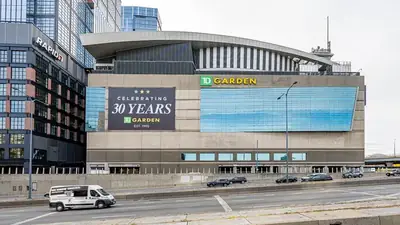
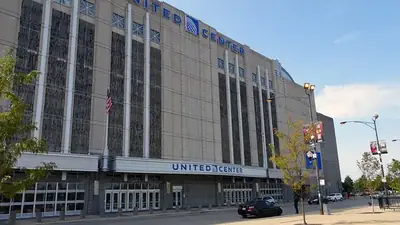
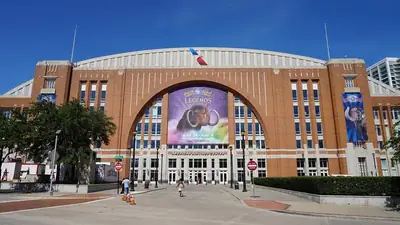
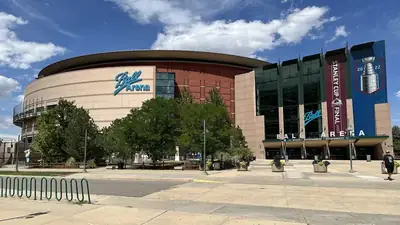
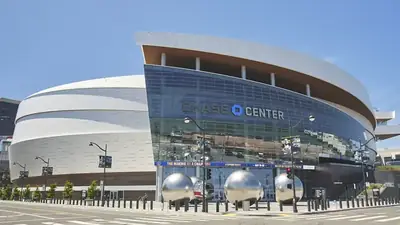
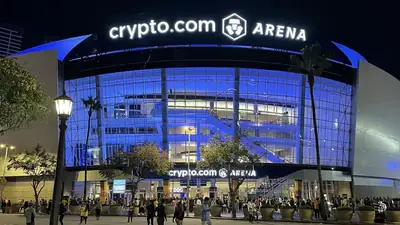
The buildings are worth knowing too. Since 2024 the Clippers have played in Inglewood at the Intuit Dome, which seats 18,300, so Crypto.com Arena now belongs to the Lakers alone. In Manhattan, Madison Square Garden shares its dates between the Knicks and the Rangers of the NHL.
Team pages first, then arena pages
Reserved Seat has a guide for every franchise and for the arenas they play in. Start with the team, then move to the building.
- Team guides: background on the club, its rivalries, the opponents and dates on its schedule that sell best, what game night feels like, and which seats suit basketball at home.
- Arena guides: the layout of levels and section numbers, top picks for games and for concerts, transit and parking, and the door and bag rules. Those rules get updated between seasons; confirm them on the arena's site before game night.
Fans keep spending more on live games. Figures from the federal Bureau of Economic Analysis show Americans spent 43.5 billion dollars on admission to spectator sports in 2025, against 31.3 billion in 2019 (not adjusted for inflation), via FRED. The league publishes its schedules at NBA.com.
Frequently asked questions
What is the best seat for watching an NBA game?
A sideline seat in the lower bowl, around rows 8 to 20. You see plays form over the bench while staying close to the court.
Are seats behind the basket a good value?
They are cheaper than the sideline, but judging depth from the end line is hard and the basket support can sit in front of the lowest rows. Choose the end the home team attacks after halftime.
How many games does each NBA team play at home?
Half of its 82-game schedule, so 41, not counting preseason, play-in or playoff games.
Do NBA Cup games count in the standings?
Yes, all of them except the championship game, which is the only Cup game left out of the regular-season standings.
Which teams play in the NBA play-in?
Each conference's 7th through 10th place teams. Two of the four advance as the seventh and eighth seeds after a short series of single games.
What is risky about buying Game 5, 6 or 7 tickets?
Those games happen only if a series goes that far. Read the seller's refund terms before you buy in case it ends sooner.