


Picking an NFL seat: the short answer
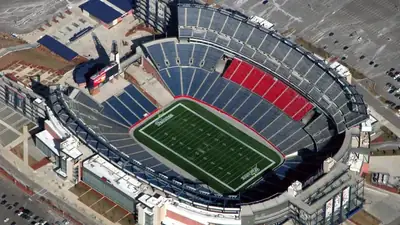
For most NFL games, the seat that gives you the most football is a sideline seat between the 20-yard lines, roughly 15 to 30 rows up in the lower bowl (the 100-level sections that ring the field). From there you see plays develop across the whole width of the field, and you sit high enough to look over the players and staff standing on the benches. The front rows feel close, but much of what you see from row 3 is helmets and the backs of coaches.
If that seat is beyond your budget, move up before you move to the end. A sideline seat in the upper level (often called the 300 or 500 level, depending on the stadium) usually shows the game better than a low seat behind the end zone, where the far half of the field flattens into a narrow strip. End-zone seats earn their keep mainly in the red zone (the last 20 yards before the goal line), where touchdowns happen right in front of you.
- Home or visitor side: sitting behind the home bench puts you among the loudest regulars; the visitor side is often where traveling fans cluster.
- Club level: a middle tier, usually with wider padded seats, indoor lounges and shorter concession lines, sold at a premium over the bowl around it.
- Aisle seats: worth requesting for long games, since you will stand up for every row-mate who heads for food.
Why the roof type changes the best row
The same yard line can be a very different ticket in two buildings. In an open-air bowl, the sun decides comfort early in the season and the wind decides it late. Indoors, the view is the only variable.
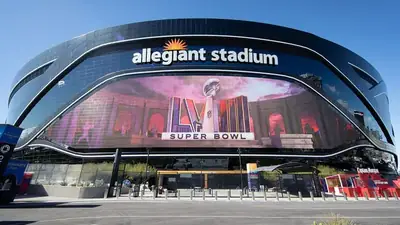
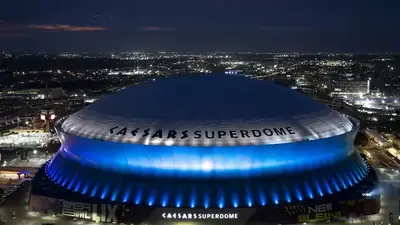
- Fixed roofs. Allegiant Stadium, Ford Field and the Caesars Superdome take weather out of the choice entirely, so seats are priced and chosen on sightline alone.
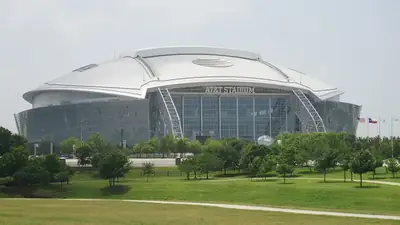
- Retractable roofs. AT&T Stadium and Lucas Oil Stadium tend to close the roof when the weather turns, but on open days sunlight can still sweep across parts of the seating bowl.
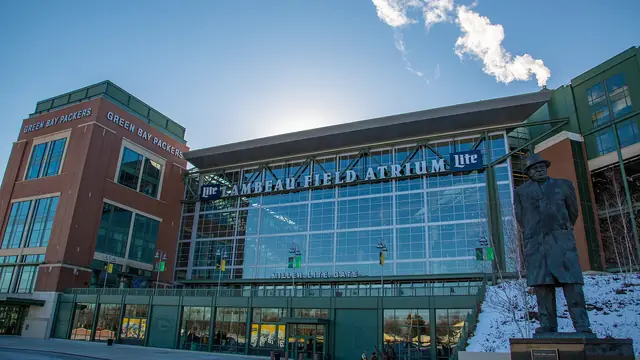
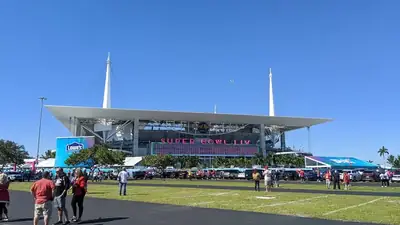
- Open-air bowls. Here, pick the shaded side for September afternoons and think about wind and cold exposure for December. Lambeau Field, with 81,441 seats, has sold out every Packers game in Green Bay since 1960, so its demand barely varies with the weather at all.
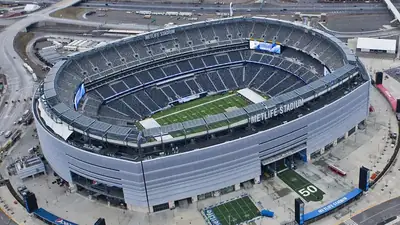
Two buildings host a pair of teams each: MetLife Stadium is home to both the New York Giants and the New York Jets, and SoFi Stadium is shared by the Los Angeles Rams and the Los Angeles Chargers. In those stadiums, check which team is the host before assuming which sideline belongs to whom.
Choose the game before you choose the seat
Each club plays 17 regular-season games and gets one bye (a scheduled week off), which leaves eight or nine home dates a year. A baseball club has 81. That scarcity is why the opponent, the calendar date and the kickoff slot move demand as much as the building does. The league publishes the full schedule each spring, and that release is the moment to plan.
- Division matchups sell most reliably. They count heavily in the standings, and rival fans can often drive to the game. Dallas Cowboys against Philadelphia Eagles, Green Bay Packers against Chicago Bears, and Pittsburgh Steelers against Baltimore Ravens are long-running examples.
- Thanksgiving is its own market. The Detroit Lions host a game every Thanksgiving, and the Cowboys have hosted one every year since 1966.
- Night games on Thursday, Sunday or Monday bring a national-TV crowd and a late finish. They often sell well, though a weeknight start can keep out-of-town fans home.
- Visiting fan bases matter. Clubs with large national followings fill road stadiums, which lifts demand for those dates.
- December dates follow the standings: a game with seeding on the line can climb, while a matchup between eliminated clubs in a cold open-air stadium usually softens.
- Preseason games sit at the bottom of the demand curve. Starters often play little, but they are the easiest first look at a stadium.
The NFL calendar from August to February
The year opens with three weeks of preseason games in August. The regular season kicks off the week after Labor Day and runs 18 weeks into early January; the 17-game format dates from 2021. Within it, each club plays its three division rivals twice (once home, once away), plus games against rotating divisions in both conferences and opponents set by the previous season's finish.
Fourteen clubs reach the postseason, a format in place since 2020: from each conference, the four division winners plus three wild cards (the best remaining records). The top seed in each conference skips the first round. The NFL Playoffs page covers how that bracket works and why those tickets reach fans on such short notice. The season ends with the Super Bowl in early February at a neutral site picked years ahead; Super Bowl LXI is scheduled for February 14, 2027, at SoFi Stadium in Inglewood, California.
All 32 franchises, grouped by division
The league splits into two conferences, the AFC (American Football Conference) and the NFC (National Football Conference), with four four-team divisions in each. Divisions set the rivalries you will hear about and the visiting jerseys you will see in your section.
American Football Conference
- East: New England Patriots, Buffalo Bills, New York Jets and Miami Dolphins
- North: Pittsburgh Steelers, Cleveland Browns, Baltimore Ravens and Cincinnati Bengals
- South: Tennessee Titans, Jacksonville Jaguars, Indianapolis Colts and Houston Texans
- West: Kansas City Chiefs, Las Vegas Raiders, Denver Broncos and Los Angeles Chargers
National Football Conference
- East: Washington Commanders, Philadelphia Eagles, New York Giants and Dallas Cowboys
- North: Minnesota Vikings, Green Bay Packers, Detroit Lions and Chicago Bears
- South: Tampa Bay Buccaneers, New Orleans Saints, Carolina Panthers and Atlanta Falcons
- West: Seattle Seahawks, San Francisco 49ers, Los Angeles Rams and Arizona Cardinals
Climate follows the map. Both North divisions play several outdoor December games in genuine cold, while the two South divisions open the year in heat where shade is worth more than any upgrade. Each team guide notes which sideline is the home side and which side catches the afternoon sun; each stadium guide explains the section numbering, the views by level and the entry rules.
Stadium changes to check before a future season
A handful of franchises are between buildings, which changes how many seats exist and where they are. As of the 2026 season:
- The Buffalo Bills moved into a new Highmark Stadium, which opened in 2026.
- The Jacksonville Jaguars are playing at reduced capacity while EverBank Stadium is renovated, and plan to spend the 2027 season at Camping World Stadium in Orlando.
- The Tennessee Titans are in their last season at Nissan Stadium, with an enclosed stadium due in 2027.
- The Washington Commanders have announced a new stadium on the RFK campus in Washington, D.C., targeting 2030.
Timelines like these slip and change, so reread the team guide before buying for a season more than a year out.
Resale, delivery and the events beyond Sundays
Most clubs sell the majority of their seats as season tickets. Much of the single-game supply therefore comes from season-ticket holders reselling dates they cannot use, which is why a routine home game can trade under face value while a rival's visit a few weeks later trades well over it. Fans keep spending more on live sports overall: the U.S. Bureau of Economic Analysis puts consumer spending on spectator sports admissions at 43.5 billion dollars in 2025, compared with 31.3 billion in 2019, in nominal terms (BEA data via FRED).
- Buy rivalry, holiday and long-sellout games early; supply rarely loosens.
- Expect mobile delivery. NFL tickets are almost always transferred into the team's app before kickoff.
- Pack for the bag rule. As of the 2026 season, NFL stadiums enforce clear-bag policies (transparent plastic, vinyl or PVC, roughly 12 by 6 by 12 inches, or a small clutch). Check the stadium's current policy before you go.
Every Reserved Seat order carries a 100% guarantee.
The football year has other events with their own rules. The Super Bowl sells largely through hospitality packages and resale, and its matchup is only known about two weeks before kickoff. The NFL Draft rotates host cities each spring and is mostly free on its general grounds; the 2027 edition is scheduled for April 29 to May 1 on the National Mall in Washington, D.C. The NFL Pro Bowl page tracks the all-star game and where it has been staged. Regular-season games abroad, including the Jaguars' frequent London trips, sell in a separate market. For schedule releases, NFL.com is the primary source.
Frequently asked questions
Where should I sit for my first NFL game?
A lower-level sideline seat between the 20-yard lines, about 15 to 30 rows up, shows the most of the game. If that is out of reach, an upper-level sideline seat usually beats a low end-zone seat.
How many home games does each NFL team have?
Eight or nine regular-season home games, because every club plays 17 games and the home split alternates each year. Preseason games and any playoff games come on top of that.
Which NFL games sell out fastest?
Division rivalries, the Thanksgiving games in Detroit and Dallas, prime-time games and late-season games with playoff stakes. Lambeau Field, sold out since 1960, is hard to get into for almost any game.
Do I want a dome or an open-air stadium?
A dome removes weather from the decision, so you choose purely on view. In an open-air stadium, pick the shaded side early in the season and dress for wind and cold late in the year.
When are NFL playoff tickets available?
Only days ahead, once matchups and sites are set. Season-ticket holders get first access, and resale supply then appears all at once.
What bag can I bring into an NFL stadium?
As of the 2026 season, NFL stadiums use clear-bag policies that allow transparent plastic, vinyl or PVC bags of roughly 12 by 6 by 12 inches, or a small clutch. Confirm the stadium's current rule before you go.