



Close and centered: the stand-up seat rule
Sit as close as you can while staying near the center line of the stage. A comedy set is a person talking, with no wall of sound or light show to carry a distant seat, so the face and the timing are the whole show. That makes proximity and angle worth more at a comedy show than at almost any concert.
- Center over side. A center seat a few rows farther back usually beats a closer side seat, since you watch expressions head-on instead of from the side.
- Raised over flat. In arenas, lower-bowl seats facing the stage tend to beat floor seats past the first several rows, where the flat floor puts heads in your way.
- Skip side-stage and behind-stage seats unless the listing promises a full view. Comedians rarely turn to the back or the wings.
- Know your crowd-work tolerance. In clubs, the front tables are in range of the comic's banter with the audience. Sit a few rows back if you would rather watch than participate.
Two general guides help here: reading a seating chart, and previewing what a given seat actually sees.
Arena, theater or club: how the room changes the show
Music can fill a big room on volume alone. Comedy cannot: if you miss a word or a raised eyebrow, you miss the joke. That is why the building matters so much.
Arenas
The biggest tours stop at buildings like the Kia Forum, Chase Center, Bridgestone Arena and State Farm Arena. Typically the stage goes at one end and large screens relay close-ups to the upper decks, so the evening resembles a concert more than a night at a club. If you sit high or off to the side, you will watch the screens more than the stage.
Theater and historic halls
Purpose-built stages like the Ryman Auditorium and Radio City Music Hall are frequently the sweet spot. Every seat was designed to face a performer, the room is more compact, and the comic can feel the audience respond. Aim for the middle of the orchestra or the first few rows upstairs; the back balcony hears well but turns faces into dots.
Comedy clubs
Tables crowded around a low platform, a few hundred people at most. Big names drop in to test new jokes, and local bills fill the other nights. Every club sets its own rules on seating, food or drink minimums and age, so read them before buying.
Think of it this way: a big-room show is an occasion, while a club set feels personal. If the jokes are what you are paying for, a theater or club seat generally delivers more than an arena's upper deck for similar money. Venue pages explain each building's layout and transit.
How big live comedy has become
Comedy has been one of live entertainment's growth stories. Pollstar's 2025 chart year, which ran from mid-November 2024 to mid-November 2025, logged 12.3 million tickets and 837 million dollars in global gross for shows headlined by comics, spread over 6,000-plus reported performances. The three-year average now sits at 12.8 million tickets annually; the 2017–2019 average was barely above 7 million (Pollstar). Promoters submit these numbers voluntarily, so treat them as a guide to trend and size, not an exact tally.
Arenas now drive the top of the chart. Nate Bargatze led everyone in that period, selling 962,955 tickets in 93 shows; Sebastian Maniscalco followed with 425,273 in 58. Once comedians play concert venues, buying their tickets starts to look a lot like buying concert tickets.
Government data points the same direction. The NEA's arts participation survey lumps comedy in with genres such as circus, magic, hip-hop, country, pop and rock as one catch-all group, and attendance in that group climbed to 21 percent of American adults in 2022, up from 15 percent five years earlier. No other attendance category in the survey grew (NEA, 2023).
Stand-up also travels light. With little more than a mic and some lighting required, a tour can hop between a theater and an arena on consecutive nights and add shows fast when a city sells well.
Comics who fill arenas and stadiums
For the comics below, you are effectively buying a concert seat: the lower bowl sees the person, and beyond it the screens take over.
- Nate Bargatze keeps his act clean, with no swearing or explicit content, so families often go together. In Nashville on April 15, 2023, he set Bridgestone Arena's attendance record at 19,365.
- Bill Burr moves between theaters and arenas, and his two stadium shows have both been near Boston: Fenway Park in August 2022, which was reported as the first comedy night ever held there, and a Gillette Stadium show in 2024 that drew upward of 60,000.
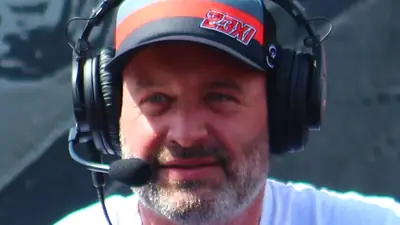
- Bert Kreischer tells extended stories from arena stages and says crowd interaction is minimal in those rooms, so front seats are fairly safe. Between 2022 and 2024 he also toured his own Fully Loaded Comedy Festival.
- Martin Lawrence hit the road again in 2024, billed as his first stand-up tour in eight years, playing arenas nationwide with a rotating cast of opening comics.
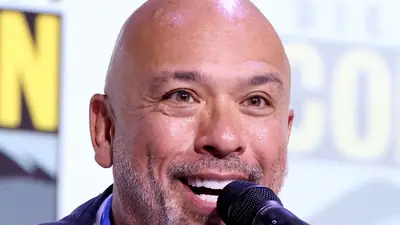
- Jo Koy graduated to arenas as his Netflix profile grew; his 2022 special was filmed at the Inglewood Forum.
- Katt Williams brings rapid-fire, explicit, adults-only sets to arenas, theaters and casino showrooms under tour names that change each run.
- Tom Segura works theaters and larger halls with bleak, dry storytelling.
Theater-first headliners and pouch-sealed phones
Not every star chases arenas. Some prefer proscenium stages, and a few take phones away at the door.
- Jerry Seinfeld sticks to civic auditoriums, performing arts centers and theaters, often doubling up with two shows in one evening. Because both sets are the same material, just pick whichever start time suits you.
- Dave Chappelle favors big theaters and amphitheaters. Since 2015 or earlier, fans at his shows have had to seal phones in locked pouches until they leave. Past runs include a ten-night stand at Radio City Music Hall in June 2014 and four Hollywood Bowl nights in May 2022.
- Jim Gaffigan built a following on family-friendly bits about eating and parenting and now plays big theaters and arenas. A sold-out Madison Square Garden date capped his 2015 tour, and in 2023 he shared an arena bill with Seinfeld.
When phones are locked away, arrive with time to spare and pick a place to regroup afterward, since you will not be texting anyone.
Podcast tapings and talks that sell like stand-up
Podcasts now drive a real slice of comedy demand, and some of these nights are not traditional stand-up at all.
- Kill Tony is a podcast recorded in front of an audience. Names come out of a bucket, each would-be comic gets sixty seconds, and then Tony Hinchcliffe and guest panelists question them. Its weekly home is Austin's Comedy Mothership, and it has scaled up to arenas, with Madison Square Garden and Forum shows announced in 2024. The tone is crude, and the panel does not go easy.
- Shows feed tours. Listeners of Burr's Monday Morning Podcast, Kreischer's Bertcast, and Segura's Your Mom's House plus 2 Bears, 1 Cave (his show with Kreischer) are a big reason those comedians can fill rooms in mid-sized cities, not only the major markets.
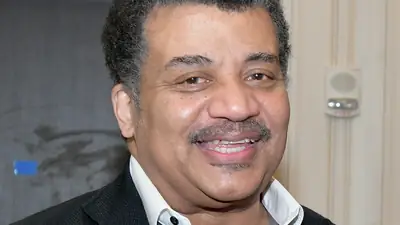
- Talks behave like comedy tickets. Neil deGrasse Tyson is a scientist rather than a comedian, yet his sit-down lectures book the same theaters and arts centers. Choose a seat that keeps both him and the big screen in view.
Added dates, late shows and other buying patterns
Comedy on-sales look like concert on-sales: an announcement, a few presales, then the public sale. The difference is how freely comedians add inventory. A city that sells out fast often gets a second or third date, sometimes stacked on the same evening as an early and late show.
- Be patient with sellouts. Before paying up for the first date, see whether another gets added; the new show arrives at face value and tends to pull resale prices down for the original.
- Try off-peak slots. Late shows and Tuesday-to-Thursday nights are usually easier than Friday or Saturday at eight, and multi-night theater stands, the Ryman's among them, often have midweek openings.
- Check who it is for. Adult content is the norm, and certain comics and venues enforce minimum ages; the event listing spells it out.
- Expect device rules at some shows. If phones will be pouched, plan to get there early.
Reserved Seat backs every order with a 100% guarantee.
Frequently asked questions
Are floor seats good for an arena comedy show?
Only the first several rows. Past that, the flat floor puts heads between you and the stage, so lower-bowl seats facing the stage usually give a clearer view of the comedian.
Will I get picked on if I sit in the front row?
In a club, the front tables are where comics look for people to talk to, so move back a few rows if that worries you. Some arena headliners, Bert Kreischer among them, say they barely interact with the crowd in big rooms.
Should I wait for a second show to be added?
Often, yes, when the first date sells out fast. Comics add shows easily, and a new date comes in at face value, which usually softens resale for the first one.
Which comedians are clean enough for families?
Nate Bargatze and Jim Gaffigan both work clean. Since adult material is typical in stand-up, read the listing and venue age rules before taking anyone under 18.
Why do some comedy shows lock up phones?
Certain comedians, Dave Chappelle among them since 2015 or earlier, require phones to stay sealed in locked pouches during the show. Get there early and agree on a regrouping spot.
How large is the live comedy market?
For its 2025 chart year, Pollstar counted 12.3 million comedy tickets and 837 million dollars in global gross, and a three-year average of 12.8 million tickets annually.