

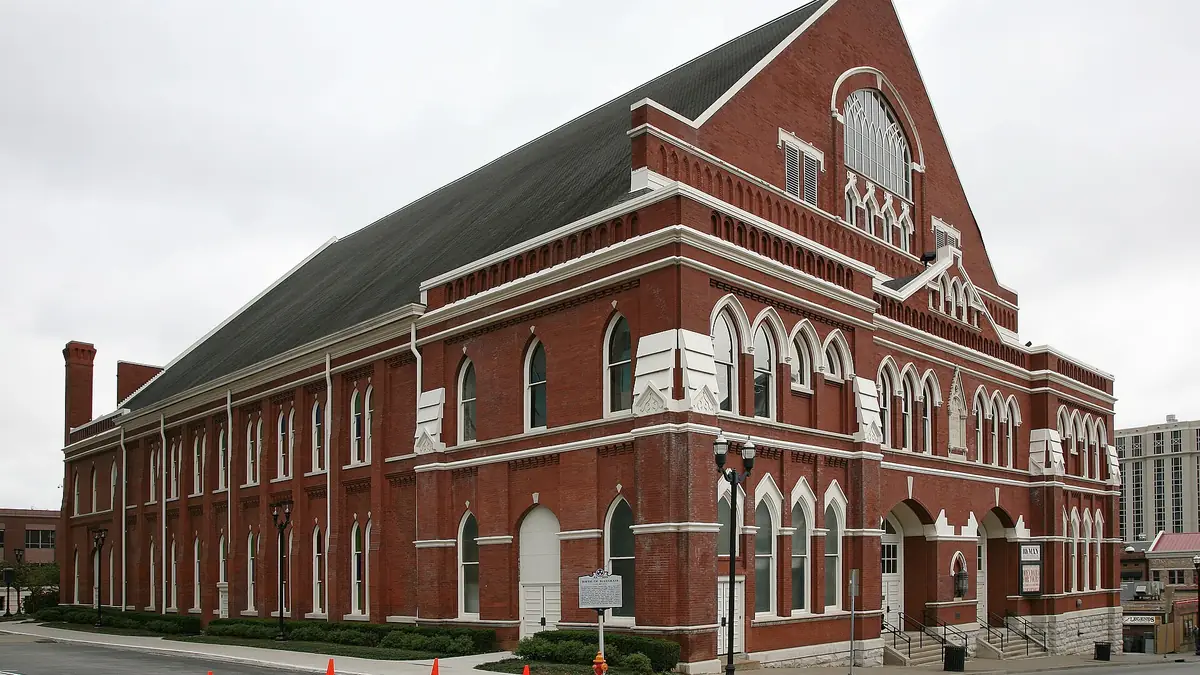

Parking, bag policy, transit and history are on the main Ryman Auditorium guide.
Your Ryman seat decision in 30 seconds
If you want one rule: sit in the front rows of the center balcony, or in the forward half of the main floor, and avoid the back of the main floor where the balcony hangs overhead. Those rear rows are where the building's support columns can block part of the stage. Everything else is a question of angle and comfort, because in a hall of 2,362 seats no ticket is truly far away.
Here is the short version of each choice:
- Center balcony, front rows: a straight view down over every head below, with nothing structural in the way. The safest pick in the house.
- Main floor, front to middle: the closest you can get, with the most energy. Expect to stand if the artist plays a loud set.
- Main floor, rear rows: cheaper for a reason. Columns and the overhang can trim the view.
- Side balcony: very close to the stage but looking across it rather than at it.
Reading a Ryman ticket: sections, rows and pews
The Ryman is a two-level room. The main floor slopes gently toward a stage at one end; above it, a U-shaped balcony (an upper tier that curves around the back and both side walls) rises more steeply. Almost every seat is a spot on a shared wooden pew, not a separate chair, yet each ticket still names a section, a row and a seat number.
The venue publishes its chart as an interactive 3D map, not as a printed diagram with a list of sections. Two independent seating guides, RateYourSeats and SeatGeek, agree on the basic numbering:
- Main floor: sections carry single-digit numbers; 3, 4 and 5 are among the blocks facing the stage.
- Balcony: sections carry numbers in the teens; 14 is one of them.
Row letters and section boundaries are not consistent enough across events to treat as fixed distances, particularly near the stage, where front rows can be added or removed. Check the seat on your listing against the event map for that date. A listing marked limited view in this building nearly always means a column sits somewhere in your line of sight.
Main floor: front, middle and under the overhang
The first rows
A few steps from the performers, close enough to read faces and catch the natural sound of a voice before it hits the speakers. You look up slightly at the stage, and at a rowdy show the people in front stand early and stay standing.
The middle of the floor
Many regulars aim here. You can see the entire stage and the lighting, the room feels full around you, and you are still clear of the balcony overhang, so nothing interrupts the view from above or from the side.
The rear rows
Toward the back, the balcony extends out over the main floor. The columns that carry it stand among the pews, so a seat directly behind one loses a slice of the stage, and the overhang crops the top of the set and the lights. The sound feels a little boxed in as well. Prices here reflect all of that.
Toward the side walls
Side blocks near the stage can be closer than the rear center, but the angle grows sharper as you move toward the wall. Expect to miss some of the far side of the stage.
Balcony: center, rear and the side arms
Plenty of fans who know the Ryman buy balcony seats on purpose. The balcony sits above the crowd, so heads in front rarely matter, and the columns that cause trouble downstairs are below you rather than ahead of you.
- Front of the center balcony: often the best seats in the building. You face the stage squarely, see all of it, and hear the room the way it was built to sound.
- Middle and back of the center balcony: still close by any arena standard. The rake (the steepness of the seating) keeps the view open, though the climb up is longer.
- Side arms of the U: they run along the walls toward the stage. The seats nearest the stage feel almost on top of the performers, but you watch from the side, turn your head for most of the night and lose part of the far side of the stage.
The balcony also tends to stay seated longer than the front of the floor, which matters if you want to sit for the whole show.
Seats to skip, and the comfort trade-offs
A few seats deserve a second look before you commit:
- Rear floor seats sold as limited view: assume a column. If seeing the whole stage matters to you, move forward or upstairs.
- Extreme side balcony near the stage: fine for a quick look at the artist, tiring over a long set.
- Middle-of-pew seats if you need to move: leaving for a break means squeezing past a row of strangers.
The pews themselves are part of the experience. Per the venue, the main-floor pews date to 1895 and the balcony pews to 1897, and all of them were restored in 1994. They were built for a congregation, not for modern concertgoers, so legroom is tight and there are no armrests dividing one seat from the next. Bulky coats and bags eat into everyone's space. An aisle seat, at the end of a pew, gives you somewhere to put a leg and an easy way out.
Matching the seat to the show
The right pew depends on what you are seeing.
- Loud rock, pop or country: the floor will be on its feet. Choose the front balcony to see over the crowd, or the forward floor if you want to be part of it.
- Acoustic, bluegrass and Americana: the sound is the point, so sit near the middle of the room, either mid-floor or front balcony.
- Comedy: faces and timing matter more than the full stage picture. A forward floor seat beats a far corner of the side balcony.
- Multi-night runs: weeknights usually leave more choice than weekends, which makes them the best time to land front-balcony seats.
Whether people stand is up to the performer. The venue notes that some artists ask that guests be allowed to stand in front of their seats for the entire performance. When that happens, the front of the floor stands first and the balcony usually follows later, if at all.
Wheelchair seating, companions and the elevator
The Ryman sells accessible seating on both levels. According to the venue:
- Companion policy: each accessible seat comes with one adjacent companion seat, and others in your party are placed as near as availability allows.
- Reaching the balcony: a single lobby elevator serves the upper level, and Guest Services staff can help you get to your seat. Leave extra time before showtime.
- Wheelchairs: complimentary wheelchairs and wheelchair escorts are available at the entrances on request, with storage for personal wheelchairs during the show.
- Restrooms: accessible restrooms are on both levels.
The venue asks you to note any special seating requirements when you buy. Review the current details on the Ryman's accessibility page before your visit. Orders placed through Reserved Seat carry a 100% guarantee.
Frequently asked questions
Where should I sit at the Ryman for the best view?
The front rows of the center balcony give a straight view from above with no columns ahead of you. The forward half of the main floor is the best choice if being close matters more than seeing over the crowd.
Why are some Ryman seats marked limited view?
The balcony is held up by columns that stand among the rear main-floor pews. Seats behind them lose part of the stage, and the overhang also crops the top of the set.
Do Ryman seats have armrests?
No. Nearly every seat is a place on a shared wooden pew with tight legroom and no armrests between neighbors. An aisle seat gives you more room to stretch.
Will I have to stand at a Ryman show?
It depends on the artist. The venue says some performers ask that guests be allowed to stand at their seats for the whole show, and the front of the main floor stands first. Comedy and acoustic shows usually stay seated.
How do balcony section numbers differ from floor sections?
Two independent seating guides agree that main-floor sections use single digits, such as 3, 4 and 5, while balcony sections use numbers in the teens, such as 14.
Can wheelchair users sit in the Ryman balcony?
Yes. The venue offers accessible seating on both the main floor and the balcony, reached by a lobby elevator, with one companion seat sold alongside each accessible seat.