
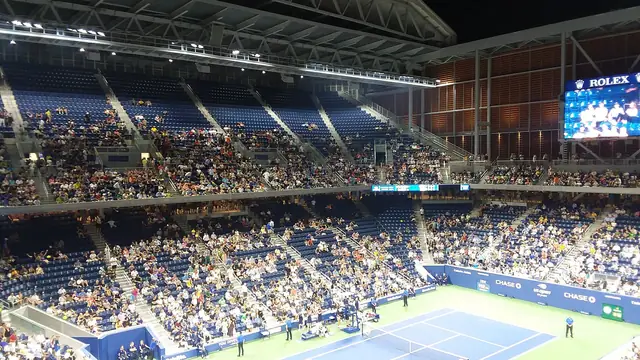
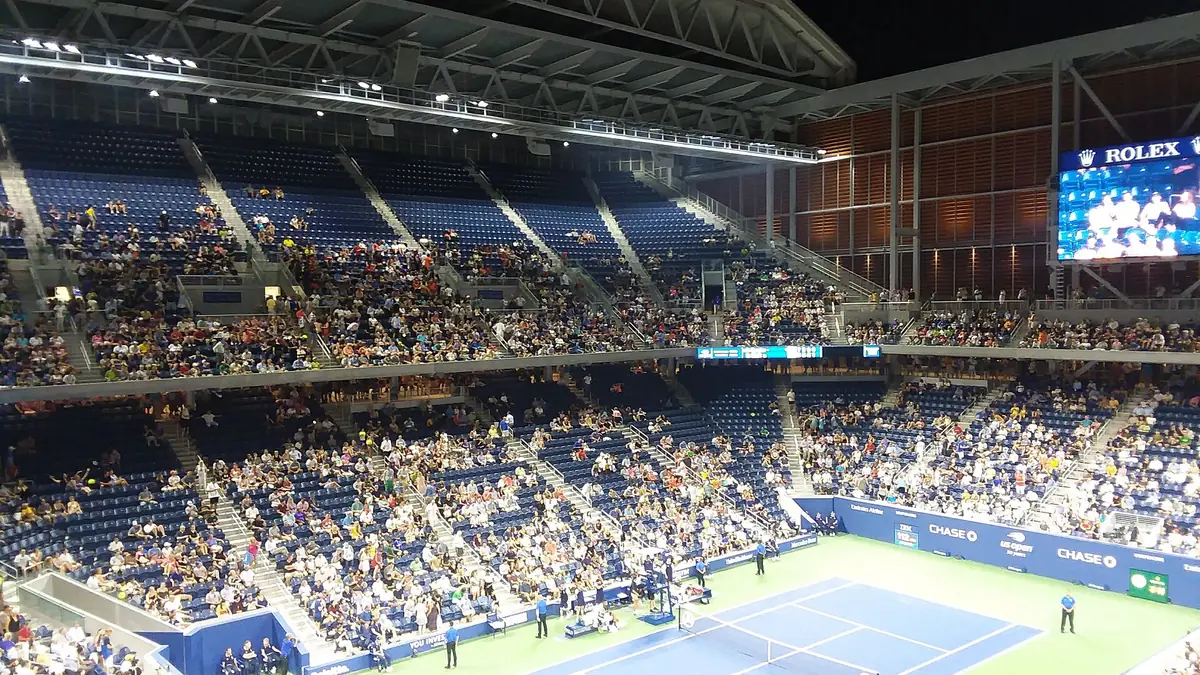

Looking for section numbers and the best seats by level? See the Louis Armstrong Stadium Seating Chart.
Upcoming events at Louis Armstrong Stadium
Dates and live ticket listings appear here as soon as they are on sale. The guide below covers what to know before you buy.
The seat call at Armstrong
At Louis Armstrong Stadium, the second show court of the US Open Tennis Championships, a reserved seat at either end of the lower bowl, a dozen or more rows up, gives you the clearest read of every rally. If you want to spend less, the upper level is the tournament's quiet bargain: Armstrong holds 14,053, about half the size of Arthur Ashe Stadium, so even its top tier sits near the court.
Two more facts shape the decision. The stadium has a retractable roof, so a reserved Armstrong ticket is close to rain-proof. And much of the upper level has traditionally been general admission, open to grounds-pass and Ashe ticket holders on a first-come basis, so where you sit up there depends on when you arrive.
What each level of ticket buys you
Lower bowl: reserved
Roughly 6,400 to 6,600 seats (Wikipedia and the Associated Press give different figures). You need an Armstrong ticket for that session, and you get a specific seat. The ticket also lets you into the general admission areas of the Grandstand and the field courts, first come, first served.
Upper bowl: mostly general admission
Roughly 7,000 to 7,400 seats, again depending on the source. Historically these have been open to anyone with a grounds pass or an Ashe ticket. Since 2024, the tournament has turned several upper sections into reserved seating, so less general admission space exists than when the stadium opened. Check the seat map to see whether a listing is reserved or general admission.
One limit to keep in mind: a grounds pass never gets you into Ashe. The access flows one way, from Ashe to Armstrong.
Best seats for watching tennis
- Behind the baseline, lower bowl. From the ends you see depth, spin and court position the way the television cameras do. Get at least a dozen rows up so the court opens up below you.
- Near the net, lower bowl. Closer to the players' chairs and more intimate during changeovers, but your head swings side to side on every point.
- Upper level, either end. The best value of the event for many regulars, especially in week one, when top seeds are often scheduled on Armstrong.
Sun at day sessions
Play starts in late morning, so the sun pattern is the reverse of a night game. The west side begins the first match in the sun and moves into shade after a few sets. If heat bothers you, bring protection for the opener or look for sections that shade early.
Seats and situations to be careful with
- Low sideline rows by the players' chairs. Line judges, ball crew and the umpire's chair block part of the court from here.
- Relying on general admission for a big name. Upper-level seats can fill well before a marquee match starts. If a grounds-pass seat is your plan, get in line early.
- Assuming the roof will close for heat. It will not. The roof is used for rain or a strong chance of rain only.
Sessions, the draw and demand
Tickets are sold by session. Day sessions run from the park's opening until about 6 p.m. and feature several matches across the grounds. Evening sessions start around 6 p.m. and are played only in Ashe and Armstrong, so the crowd is concentrated on fewer matches.
The first week is when Armstrong gives you the most tennis for your money, because the draw is large and top players are split between the two big stadiums. Demand runs highest for weekend sessions and for evening sessions featuring a top seed or a New York favorite. In week two, more of the headline singles matches shift to Ashe. Resale prices follow the order of play, which usually comes out the day before. For 2026, Fan Week ran August 23 to 29, and the main draw began August 30.
Every Reserved Seat order is backed by a 100% guarantee.
Rain plan: the ventilated roof
When it opened, Armstrong was billed as a tennis first: a covered stadium cooled by natural airflow. Gaps at the north and south ends keep outside air moving even when the roof is shut, so the building needs no pre-conditioning before it closes.
Reports of closing time differ. At the opening, the tournament said under five minutes; the US Open's 2018 roof protocol listed about seven minutes to close and seal. The tournament referee makes the call, and the referee can also reopen it at any time. While the outer courts sit idle during a late-summer storm, matches here keep going.
Getting to Flushing Meadows
Take the train. Subway trains and the LIRR's Port Washington Branch share a stop, Mets–Willets Point, and from the platform it is a few minutes on foot to the tennis center. Driving puts you in tournament traffic, and on some dates the New York Mets are also home at Citi Field next door.
Security lines can back up in late morning and before the evening session, so build in time. The US Open publishes a bag-size limit and a prohibited-items list every year; check the tournament's website before you go, because the rules change.
A stadium with two lives
The Armstrong name goes back decades at this site. The first stadium was adapted from the Singer Bowl, built for the 1964 New York World's Fair, and served as the US Open's main court from 1978 until Ashe opened in 1997; by the end it seated about 10,500. The name honors Louis Armstrong, the jazz trumpeter and singer who lived in nearby Corona, Queens, where his home is now the Louis Armstrong House Museum.
The old stadium came down after the 2016 tournament. Rossetti designed the replacement, which cost about 200 million dollars and finished a roughly 600 million dollar, five-year campus renovation that also put a roof over Ashe in 2016. Its terra cotta exterior echoes the older brick buildings on the grounds. The new stadium opened August 22, 2018, and Simona Halep played Kaia Kanepi in the first match on its court on August 27. Outside the tournament it has staged boxing (July 2025) and pro wrestling, adding to the event calendar of New York City.
Frequently asked questions
Are upper-level seats at Louis Armstrong Stadium any good?
Yes. Armstrong is about half the size of Arthur Ashe Stadium, so its upper level sits much closer to the court than Ashe's upper deck. Many fans consider it the best value of the tournament.
Can I sit in Louis Armstrong Stadium with a grounds pass?
You can take a first-come general admission seat in the upper level. Since 2024 some upper sections have become reserved, so general admission space is more limited.
Will the roof close at Louis Armstrong Stadium on a hot day?
No. Under the US Open's roof protocol, it closes only for rain or a strong chance of rain, at the referee's decision.
Are there night sessions at Louis Armstrong Stadium?
Yes. Evening sessions, starting around 6 p.m., are held only in Arthur Ashe and Louis Armstrong stadiums.
How many people does Louis Armstrong Stadium seat?
It seats 14,053, often rounded to 14,000, split roughly evenly between the reserved lower bowl and the upper level.