


The tennis seat decision, answered
For most fans, the strongest seat at a tennis match is a middle-height row behind the baseline (the back line at either end of the court), not the lowest row along the side. From the end you read the depth, spin and height of every ball, and you see serve speed the way the returner does. A low sideline seat feels closer and matches the TV angle, but your head swings left and right on every rally, and a high sideline seat gives up that closeness without gaining the end-court view.
Two other factors change the answer. The first is sun: at an outdoor day session, a shaded section is worth more than a few rows of proximity. The second is stadium size: at the biggest venues, the top rows sit a long way from the court, and a grounds pass that puts you in the front row of an outer court can be the better seat for the money.
Baseline, sideline, upper deck and shade
- End-court, mid-height: the purist's choice and the easiest way to follow tactics. Many regular fans take this over a premium sideline seat.
- Low sideline: the most expensive rows, right beside the players' chairs at changeovers (the short breaks when players switch ends). Worth it for atmosphere, tiring for following play.
- High sideline: the weakest value in most stadiums, far away and still side-on.
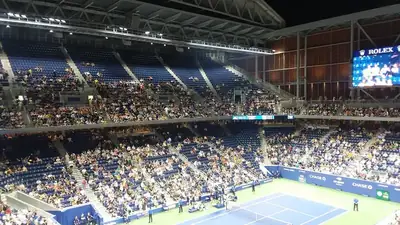
- Top of Arthur Ashe Stadium: no tennis venue anywhere is bigger, and its upper rows sit far above the court. In the early rounds, a lower row in a smaller stadium, or an outer-court seat on a grounds pass, gets you nearer the same players.
- Shade: in Arthur Ashe Stadium, shade guides put the south-end sections out of the sun from morning to evening, with the west side joining them by mid-afternoon. In the California desert and in spring in South Florida, check the sun's path for a day session before you choose a side.
- Aisle access: during points, ushers keep latecomers waiting at the top of the aisle and let you in or out only at changeovers, so a seat close to your entry portal saves waiting if you plan to come and go.
Session tickets versus grounds access
You do not buy a match at a tennis tournament; you buy a court for a block of time. A day session runs through several matches on one court, and the larger events add an evening session on the main stadium, normally two featured matches. The tournament decides who plays where and usually publishes that schedule, called the order of play, on the previous night.
- A stadium ticket reserves one seat in one stadium for one session. At the US Open, holding an Arthur Ashe seat also gets you onto the unreserved courts.
- A grounds pass is general admission. For the 2026 US Open, it was described as covering the field courts, the Grandstand and the unreserved sections of Louis Armstrong Stadium, with Arthur Ashe Stadium excluded.
Supply and demand move in opposite directions as the event goes on. In the first rounds, with play on every court, seats are plentiful. By the quarterfinals, only one or two stadium sessions are left each day, and buyers compete for far fewer seats. Evening sessions are the hot ticket in week one, since organizers put star players under the lights. One caution: you commit before the bracket plays out, so a late-round ticket buys a stage of the event, not a guaranteed favorite.
Tournament by tournament: when, where and how big
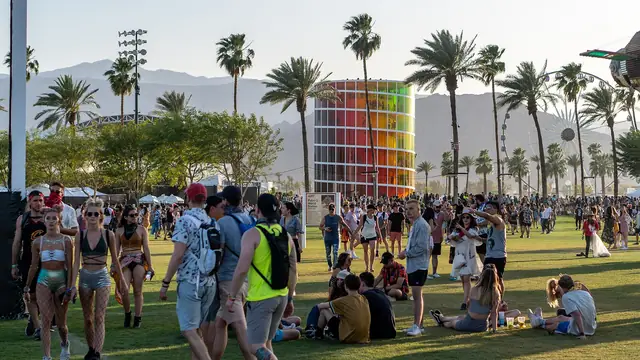
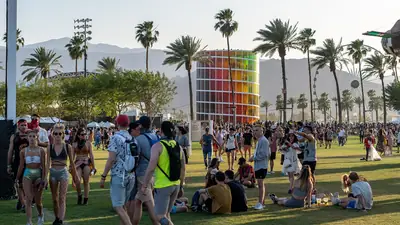
- BNP Paribas Open (March): played at the Indian Wells Tennis Garden, which opened in 2000 in the Coachella Valley and has 29 courts. Its Stadium 1, at about 16,100 seats, trails only Ashe among permanent tennis stadiums; Stadium 2 holds about 8,000. Often called the fifth Grand Slam, the event drew 493,440 people in 2024, more than any tournament outside the Slams.
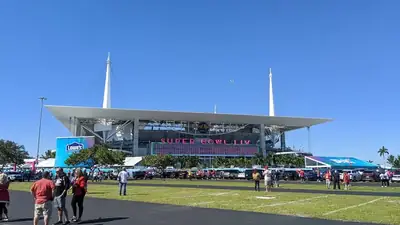
- Miami Open (late March into April): a 12-day event at Hard Rock Stadium in Miami Gardens since 2019, when it left Key Biscayne. Its center court is a temporary bowl erected inside the football stadium, with use of the stadium's suites, and permanent courts now occupy old parking lots. More than 386,000 came in 2023. Players who win here and at Indian Wells in one year complete the Sunshine Double.
- Washington DC Open (summer): held at the William H.G. FitzGerald Tennis Center in Rock Creek Park, Washington, D.C., and the only event ranked at the 500 level on both the ATP and WTA tours.
- Cincinnati Open (August): first staged in 1899, it is the oldest American tournament still held in or near its original city. The Lindner Family Tennis Center in Mason, Ohio, has 31 courts and a center court near 11,600 seats, and the event expanded in 2025 to 12 days and 96-player draws.
- US Open (late August to early September): dating to 1881, and at the USTA Billie Jean King National Tennis Center in Queens since 1978. Arthur Ashe Stadium (23,771 seats, roofed in 2016) is the main court; Louis Armstrong Stadium (about 14,000, also roofed), the Grandstand (8,125) and Court 17 (2,800) follow. A record 1,144,562 attended in 2025, and a free Fan Week with qualifying matches opens the fortnight. The Louis Armstrong Stadium Seating Chart breaks down that court's sections.
- Wimbledon (late June and July): the oldest tournament of all, on London grass since 1877, with the 2027 edition set for June 28–July 11. Most seats are allocated by public ballot or through the daily Queue, and debentures are the only tickets the club allows to be resold; the Wimbledon guide explains each route.
How the pro tour fits together
There is no tennis league. Instead, the ATP Tour (men) and the WTA Tour (women) run a year of separate tournaments, and the biggest of them stage both draws together. At the top sit the four Grand Slams: Melbourne in January, Paris in late spring, Wimbledon at the turn of June and July, and the US Open at the end of summer. A tier below are the 1000-level events, the most important stops outside the Slams, and below those the 500 and 250 tournaments.
America hosts one Slam plus three of the nine ATP 1000 events (Indian Wells, Miami and Cincinnati), all with combined men's and women's fields. Every tournament lasts between one and two weeks and loses players daily, which is why choosing the right day matters as much as choosing the right section.
Habits that make a first tournament better
- Go in week one. On a grounds pass in the early rounds, you can stand almost courtside for players you would watch from far away later.
- Find the practice courts. Top players usually hit there in the morning, and crowds are thin.
- Check tomorrow's schedule tonight. The order of play tells you where to go when the gates open.
- Expect weather. Rain halts every court without a roof. Pack sunscreen, a hat and water for March in the desert and August in New York.
- Look up the bag limits. They differ by tournament and change from year to year; confirm them on the event's own site, for example usopen.org, before leaving home.
Every Reserved Seat order is backed by a 100% guarantee.
Frequently asked questions
Which side of Arthur Ashe Stadium is in the shade?
Shade guides say the south end stays out of the sun all day, and the west side follows from mid-afternoon. It matters most for late-summer day sessions.
Is a grounds pass worth it at a big tournament?
In the first rounds, yes. You can watch top players at close range on the outer courts, although at the US Open the pass stops short of Arthur Ashe Stadium.
Can I walk to my seat during a point?
No. You wait at the top of the aisle until the players change ends, so a seat near your entrance makes coming and going easier.
When do tennis tickets draw the most demand?
From the quarterfinals onward, when the schedule narrows to one or two stadium sessions a day. In the first week, evening sessions with star players sell best.
How do Wimbledon tickets work for American fans?
Seats come from the public ballot, the Queue on the day, debentures or official hospitality packages. The club permits resale of debentures only.
Sources
- Wikipedia: US Open (tennis)
- Wikipedia: Arthur Ashe Stadium
- Wikipedia: ATP Masters 1000
- Wikipedia: Indian Wells Open
- Wikipedia: Indian Wells Tennis Garden
- Wikipedia: Miami Open
- Wikipedia: Cincinnati Open
- Wikipedia: Washington Open
- Wikipedia: Wimbledon Championships
- Wimbledon: ticket ballot
- Ticketmaster: US Open fan buying guide
- Shaded Seats: Arthur Ashe Stadium