
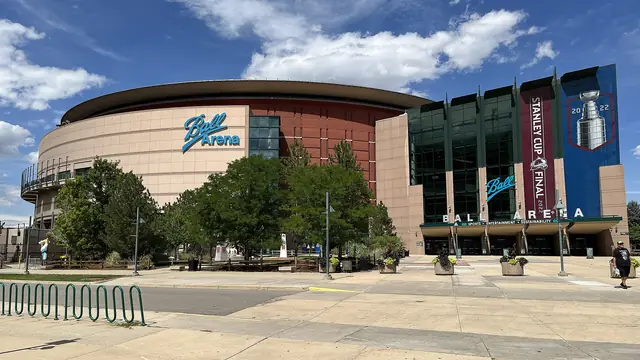
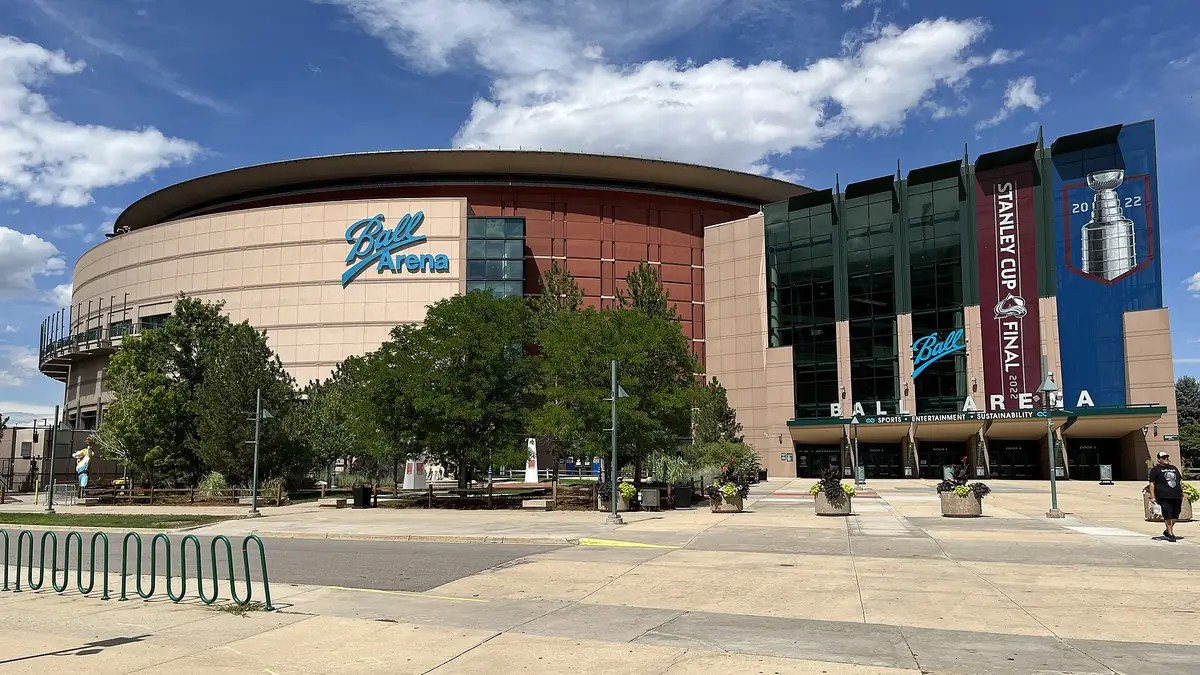

Looking for section numbers and the best seats by level? See the Ball Arena Seating Chart.
Upcoming events at Ball Arena
Dates and live ticket listings appear here as soon as they are on sale. The guide below covers what to know before you buy.
The short answer: where to sit at Ball Arena
For most events at Ball Arena, the smartest buy is a sideline seat in the lower bowl around rows 10 to 20, or a front-row seat in an odd-numbered 300-level section. Those odd sections sit at the lip of the upper deck, so you get a clear, unobstructed look at the whole floor without paying lower-bowl demand. If comfort matters more than closeness, the 200-level club rows are short and quiet and sit nearer the action than their level number suggests.
The building itself is Denver's main indoor arena. It hosts the Denver Nuggets of the NBA, the Colorado Avalanche of the NHL and the Colorado Mammoth of the National Lacrosse League, and it books arena concerts throughout the year. Capacity is 19,520 for basketball, 17,809 for hockey and lacrosse, and roughly 21,000 for concerts.
How the three tiers stack up
Ball Arena is a three-tier bowl. Each tier trades distance for something else, and knowing the trade makes listings much easier to compare.
- 100 level (lower bowl): the ring of sections that wraps the floor. This is the loudest part of the building and the priciest during playoff runs.
- 200 level (club): a narrow band of sections that are mostly only four rows deep, with a fifth row in some sections reserved for accessible seating. Ticket holders here use the club concourse, which tends to mean shorter lines.
- 300 level (upper deck): steeper and farther, but split in a way many buyers miss. Odd-numbered sections form the front of the deck; even-numbered sections climb behind them.
That last point is worth repeating because it changes the value of a seat. Section 335 and section 336 can look like neighbors on a map, yet one puts you near the rail and the other several rows higher. When two upper-level listings look similar, the odd number is usually the better seat.
For the premium end of the market, Club Lexus is the arena's all-inclusive club for Nuggets and Avalanche games.
Sport-by-sport picks for Nuggets, Avalanche and Mammoth games
Nuggets basketball
According to RateYourSeats, the team benches sit in front of sections 102 and 148, which makes those sideline sections the most sought-after in the building. Rows 10 and higher clear the courtside seats and the bench, so you see the full court rather than the backs of players' heads. Behind the baskets, low rows are fine for watching one end up close but flatten the depth of play at the other end.
Avalanche hockey
Hockey rewards a little height. Seats in the first few rows put you against the glass, which is great for watching board battles and poor for following a breakout at the far end. Rows 10 to 20 in the lower bowl, or the front of the odd-numbered upper sections, show passing lanes across the full sheet. The Avalanche shoot twice at the east end, where the lower sections are numbered in the 130s, so a seat behind that net means two periods of home attacks.
Mammoth lacrosse
Lacrosse is typically the easiest ticket in the building and a lively, family-friendly way to try the arena. Because the game moves end to end quickly, a center-line seat in the lower bowl gives the best sense of the action.
Concert seats, and the seats to pass on
For an end-stage concert (the stage set at one end of the floor), the floor and the lower-bowl sections angled toward the stage are the premium seats. The upper-deck end opposite the stage faces the show straight on, which suits fans who care about the full lighting design more than proximity.
Be cautious with these:
- Side sections near or behind the stage line: parts of the stage, screens or effects can be blocked. Check whether the listing is labeled limited view or side view.
- The first rows of the hockey lower bowl, if you want the whole picture: the glass and the angle make the far end hard to read.
- Even-numbered 300-level seats priced like odd-numbered ones: you are paying for a front-of-deck view you will not get.
Demand rises for weekend dates, rivalry games and any playoff run, so those are the nights when choosing early pays off most.
Getting in: the no-bag rule, digital tickets and doors
Ball Arena runs one of the strictest bag policies among major arenas. As of 2026, general bags are not allowed at all. Medical and diaper bags up to 14 by 14 by 6 inches are permitted after inspection and must come through the VIP/ADA Door 1 at the Grand Atrium or East Atrium entrances. Paid lockers in the Grand Atrium hold anything else, but with no re-entry, whatever you store stays there until the event ends. Rules can vary by event, so read the arena's bag policy before you leave home.
- Tickets: every ticket and parking pass is digital, so load them into your phone's wallet in advance.
- Doors: usually open about one hour before the event.
- Ages: anyone 3 or older needs a ticket for Nuggets, Avalanche and Mammoth games; most concerts require one from age 2.
- Paying: concessions and premium spaces are cashless.
- Smoking and vaping: banned throughout, and stepping out to smoke ends your visit.
Every Reserved Seat order is backed by a 100% guarantee.
Light rail, parking lots and rideshare
Rail is the simplest way in. The Ball Arena–Elitch Gardens station is on the west side of the building, served by the RTD D, E, H and W lines. Buses stop at 9th Street and Auraria Parkway, and the free MallRide along the 16th Street Mall links to Union Station. If you ride a bike, the Cherry Creek Trail reaches the arena and racks are available.
Driving means one of the arena's surface lots, all named after Toyota models (Camry, Corolla, 4Runner, Tacoma, Tundra, RAV4 and TRD-Pro), or the separately operated Elitch's lot next door. The lots open three hours before an event. Rideshare pickups and drop-offs use the 4Runner West lot, entered at 5th and Walnut streets. The arena's public transportation page has current details.
Background: from Pepsi Center to Ball Arena
The arena cost about 187 million dollars and opened in October 1999 as the Pepsi Center, giving the Nuggets and Avalanche a new shared home after McNichols Sports Arena. Ball Corporation took the naming rights in October 2020. Kroenke Sports and Entertainment owns the building.
Its trophy cabinet is unusually full. The Avalanche won the Stanley Cup Final on home ice in 2001, in the arena's second season, and again in 2022. The Nuggets clinched their first NBA championship here in the 2023 Finals. The building also staged the 2001 NHL All-Star Game, the 2005 NBA All-Star Game, the 2008 Frozen Four, NCAA tournament games and most of the 2008 Democratic National Convention, and it was home to the Colorado Crush of the Arena Football League from 2003 to 2008.
Frequently asked questions
Are odd or even sections better in the Ball Arena upper level?
Odd-numbered 300-level sections sit at the front of the upper deck, while even-numbered sections rise behind them. When prices are close, the odd section usually gives the closer, clearer view.
Where do the Nuggets and Avalanche benches sit?
According to RateYourSeats, the benches are in front of sections 102 and 148 on the lower-bowl sideline.
Which end do the Avalanche attack twice?
The Avalanche shoot twice at the east end of the arena, the end with lower-bowl sections in the 130s.
Is any bag allowed at Ball Arena?
As of 2026, only medical and diaper bags up to 14 by 14 by 6 inches are allowed, after inspection at the VIP/ADA Door 1. Paid lockers in the Grand Atrium hold other items until the event ends.
How many people does Ball Arena hold?
Capacity is 19,520 for basketball, 17,809 for hockey and lacrosse, and about 21,000 for concerts.
Where is the rideshare area at Ball Arena?
Rideshare uses the 4Runner West lot, entered at 5th and Walnut streets. The arena's lots open three hours before events.