

Looking for section numbers and the best seats by level? See the Lincoln Financial Field Seating Chart.
Upcoming events at Lincoln Financial Field
Dates and live ticket listings appear here as soon as they are on sale. The guide below covers what to know before you buy.
The quick answer for Eagles fans
If you can afford it, sit on the Philadelphia Eagles sideline between the 30-yard lines: lower-level sections 101 to 104 and 137 to 138, or the club seats directly above. If you want the same view for less, cross the field to sections 118 to 123, where the geometry is identical and only the bench in front of you changes. In either case, aim for rows in the low 20s, high enough to see over the sideline crowd and still close to the grass.
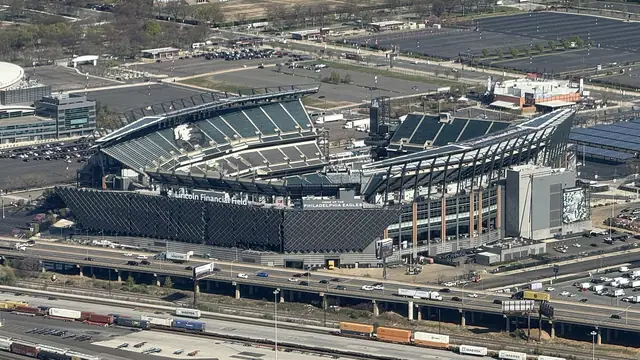
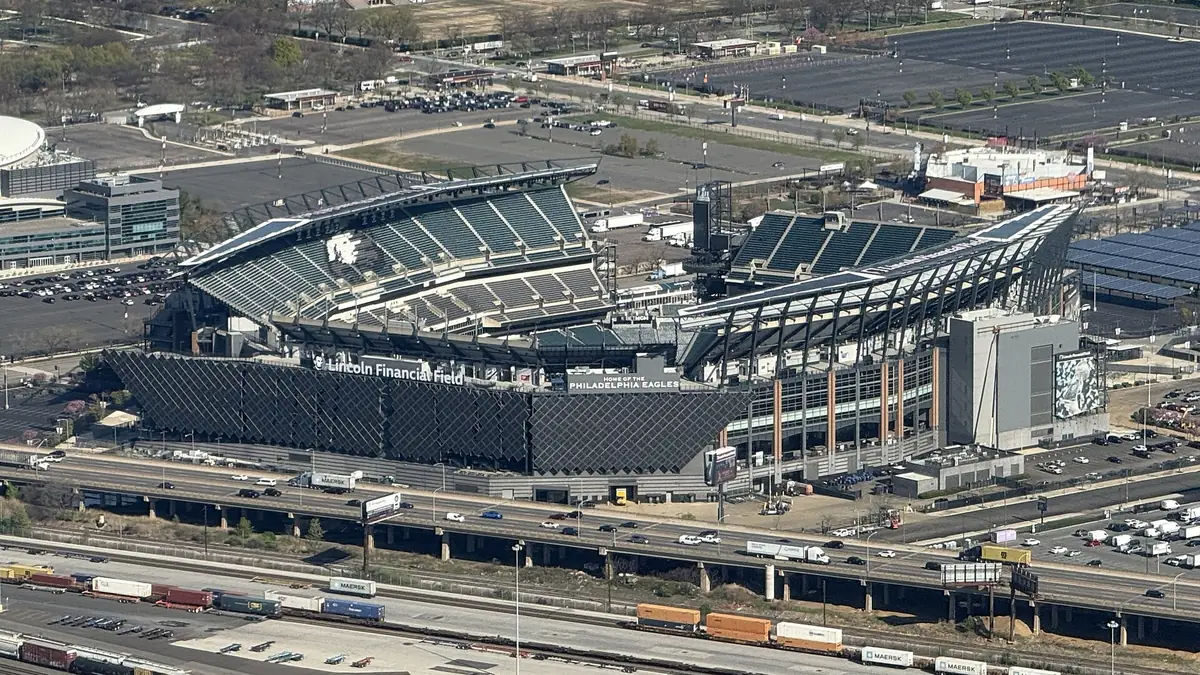
Lincoln Financial Field, the Linc to locals, holds 67,594 and is compact by modern NFL standards. Two seating decks with a club tier between them keep even the upper level near the field, which is a big reason Eagles games are such a hard ticket.
How the sections are numbered
Three tiers, each with its own number series:
- Lower level, sections 101 to 138. The count wraps around the bowl, and the first and last sections meet near midfield on the home side.
- Club level, sections C1 to C40. Sideline seats with indoor lounge access.
- Upper level, sections 201 to 244. Same pattern as the lower bowl, one deck higher.
- Concert floor. Temporary sections built on the field for end-stage shows.
Philadelphia's bench is on the west side, with sections 101 and 102 nearest the 50 and the home stretch running from 137 through 104. The opponent's bench faces it from the east, below roughly 118 to 123, and road fans, who have no designated block, tend to gather there. For Temple Owls games the home bench flips to the opposite sideline.
Sections that deliver for football
Home sideline, lower level
Sections 101 to 104 and 137 to 138 carry the highest demand in the building. Part of the reason is what sits behind them: the midfield Firstrust Bank Club, whose ticket holders get food and an open bar, is right behind the home bench.
Visitor sideline, lower level
Sections 118 to 123 mirror the home side. For a fan who cares about the view rather than the bench, this is often the smartest buy in the lower bowl.
Upper sideline
Sections 201 to 204 on the home side and roughly 223 to 226 across the field show the whole field and let you watch plays develop. Go a few rows up, so the staff and equipment along the sideline do not crowd the near edge.
Corners
Lower corners are fine for scoring plays at that end and weaker for reading what happens between the 30s.
Covered rows and other trade-offs
The Linc has no roof, but the club deck projects out above the rear of the 100 level, which keeps the highest rows in many of those sections dry in a shower. In section 122, for instance, cover starts around row 29.
- Under the overhang: protection from rain and some sun, but the ceiling cuts off high punts and deep passes.
- Rows 1 to 10 on either sideline: close, but low; the bench area blocks much of the near side.
- Upper end zones: the most distant seats, especially for concerts.
The middle ground, around rows 18 to 25 in the lower bowl, is where most experienced fans try to land.
Seats for concerts, soccer and Army-Navy
For an end-stage concert, the floor sections nearest the stage and the lower sideline sections angled toward it balance distance and view best. Seats behind the stage go on sale only when a production is designed for it. The upper end zone facing the stage is the farthest you can sit; the sound travels, but the performers look small.
Beyond the Eagles and Temple, the stadium hosted WrestleMania XL in April 2024 and six matches of the 2026 FIFA World Cup. The Army-Navy Game is a frequent visitor, but it rotates among East Coast stadiums, so confirm the host city for the year you plan to go.
Subway, parking and the tailgate
Few NFL stadiums are easier to reach by train. Take SEPTA's Broad Street Line (the B line in SEPTA Metro branding) to the last stop, NRG Station, and you come up at the corner of Broad and Pattison with the stadium in view. Express trains may run for big games, and bus routes 4 and 17 also serve the complex. Confirm service with SEPTA before you leave.
If you drive, expect the complex lots to open about 4.5 hours ahead of kickoff, and buy your pass in advance, as the team suggests. Roads into the complex jam early on big game days, so give yourself time.
Eagles tailgating is a tradition, but not every lot allows it. Grills are off-limits in Lots Q through W, the lots north of Pattison Avenue and west of Darien Street. If the tailgate is half the reason you are going, check which lot your pass covers.
Entry rules, as of 2025
The stadium's guide listed the following for the 2025 season. Check the A-Z stadium information page for the current version before you go.
- Bags: a clear plastic, vinyl or PVC bag up to 12 by 6 by 12 inches; a clear one-gallon freezer bag; or a small bag of any color up to 4.5 by 6.5 inches.
- Gate times: on Eagles game days, the Pepsi Plaza opens about three hours early, club and suite doors about two hours early, and the inner gates 90 minutes before kickoff.
- Re-entry: not permitted.
- Payment: cashless; cash-to-card machines are in the Pepsi lobby and near sections 105 and 122.
- Smoking: banned everywhere inside, e-cigarettes included.
Any ticket bought on Reserved Seat is backed by a 100% guarantee.
Before kickoff, and how the Linc got here
Most groups meet at the Pepsi Plaza, a 110,000-square-foot space with a big video screen, food stands and the Eagles Pro Shop. On the premium side, the menu runs from Red Zone seats and suites and the Bud Light Eagles Nest to the Firstrust Bank Club and Presidents Club suites.
Construction began May 7, 2001, at a cost of about 512 million dollars, and the stadium opened August 3, 2003, at 1020 Pattison Avenue in the South Philadelphia Sports Complex beside Interstate 95, replacing Veterans Stadium. The City of Philadelphia owns it, and the Eagles run it under a lease. The Philadelphia Union of MLS played here until moving to their own stadium in 2010. A 2013 to 2014 project costing more than 125 million dollars added seats, video boards and WiFi. Several NFC Championship Games have been played at the Linc, including the Eagles' 55–23 win on January 26, 2025, a reminder of why Philadelphia treats this building as its football home.
Frequently asked questions
Where do Eagles fans sit at the Linc?
The whole building leans green, but the home bench sits on the west sideline below sections 101 to 104 and 137 to 138, and those seats are the most requested.
Where do visiting fans sit at Lincoln Financial Field?
No block is reserved for road fans. Most buy on the east sideline, roughly sections 118 to 123, or in the upper sections above that side.
Which rows at Lincoln Financial Field stay dry?
The top rows of many lower-level sections sit beneath the club deck. In section 122, cover begins around row 29.
How many seats does Lincoln Financial Field have?
It seats 67,594 for football.
What time do gates open for Eagles games?
As of the 2025 season, the Pepsi Plaza opened about three hours before kickoff and the inner gates about 90 minutes before. Parking lots generally open four and a half hours early.
Can you take the subway to Lincoln Financial Field?
Yes. Ride SEPTA's Broad Street Line to the final stop, NRG Station, and walk a few minutes to the gates.