
Sit for the sound, then the view
For an orchestra concert, aim for the center of the main floor about a third to halfway back, or the front rows of the first balcony. Both put you where the sound of a full orchestra has blended. The front few rows feel exclusive but sit too close and too low: you mostly hear the violins nearest you and see little of the woodwinds, brass and percussion behind them.
Classical music is usually unamplified, which flips the logic of a rock show. Distance is not the enemy; balance is the goal. A seat that lets the hall do its work, mixing the sections before the sound reaches you, will beat a closer seat almost every time. The exceptions are amplified outdoor venues, where sightline and comfort matter more than acoustics.
Matching the seat to the hall
Shoebox halls
In a traditional rectangular hall such as Boston's Symphony Hall, the front and center of the first balcony is often the finest seat in the building, since sound gathers as it rises.
Surround or vineyard halls
Walt Disney Concert Hall places some audience sections to the sides of the stage and behind it. Seats beside or behind the orchestra show you the conductor's face and an unusual mix of sound. Plenty of regulars love them. For a first visit, or any program with a vocal soloist, face the stage.
Opera houses
Two things matter: a clear view of the titles (the translation shown above or near the stage while singers perform) and a view of the entire set. A front-row seat in an upper tier frequently outperforms a lower seat far off to one side.
Amphitheaters
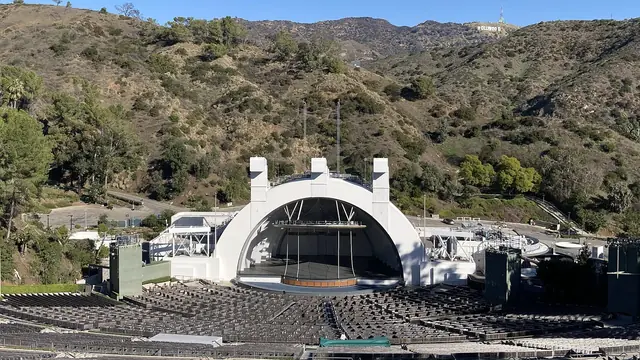
At the Hollywood Bowl, sound comes through speakers, so the priorities are a centered sightline and comfort. For the Bowl's boxes, benches and Super Seats, use the Hollywood Bowl Seating Chart.
Halls and orchestras worth the trip
Five ensembles, often called the Big Five, historically led American orchestral life: Cleveland (1918), Philadelphia (1900), Chicago (1891), Boston (1881) and the New York Philharmonic, oldest of the group (1842). Three halls stand out for a visitor.
- Carnegie Hall in New York opened in 1891. Its main room, Stern Auditorium, seats 2,790, alongside Zankel Hall (599) and Weill Recital Hall (268). The New York Philharmonic left for Lincoln Center in 1962, so the hall now presents around 250 performances a season by touring orchestras and soloists.
- Symphony Hall in Boston opened on October 15, 1900, seats 2,625 and is where the Boston Pops and Boston's symphony play. A National Historic Landmark, it is routinely ranked among the best-sounding concert halls anywhere.
- Walt Disney Concert Hall in Los Angeles, designed by Frank Gehry, opened on October 23, 2003, with 2,265 seats. The city's philharmonic and its Master Chorale both perform there, and its layout blends vineyard and shoebox ideas.
For opera, the Metropolitan Opera has played Lincoln Center since 1966 in a house of about 3,732 seats plus 245 standing places, rotating roughly 18 operas a year. A Met season usually opens in late September and closes in early June. The Opera and Ballet hubs go further into both art forms.
Lawns and sheds: the summer circuit
When indoor seasons end, the major orchestras head outdoors, and summer becomes the easiest time to try classical music. Expect movie music, fireworks finales and well-known pieces, and a picnic is part of the evening.
- Hollywood Bowl: a hillside amphitheater of 17,500 seats, open since July 11, 1922, serving as the Los Angeles Philharmonic's summer home. The 2026 summer, the LA Phil's 104th at the Bowl, stretched from late June (the 20th) through September 27. LA Phil classical nights are usually the easiest Bowl tickets to get, while pop and rock nights booked by outside promoters see the heaviest demand.
- Tanglewood: in the Berkshire hills of western Massachusetts, where Boston's orchestra has spent its summers since 1937. Its main venue, the Koussevitzky Music Shed, has roughly 5,100 seats, and open lawns stretch out behind.
- Ravinia: in Highland Park, Illinois, the Chicago Symphony Orchestra's summer home since 1936, presenting roughly 100 to 120 events between June and September.
Lawn tickets are the classic summer bargain. Pack a blanket and a meal, and let the speakers carry the music; just accept that the orchestra will be a distant shape.
Subscribers first, then everyone else
Classical presenters publish an entire year's programs in advance, sell subscriptions (packages of several concerts) first, and release single tickets afterward. At the Hollywood Bowl in 2026, new subscriptions went on sale February 18, while single tickets waited until May 5. Subscribers pick seats first, so the prime locations for a popular program can be gone before single tickets appear.
- The program sells the concert. Beethoven's Ninth, a star soloist, a film score played live or a holiday show moves faster than an unfamiliar new work on the same series.
- Most nights have room. The audience is devoted but small: federal arts survey data for the 12 months to July 2022 show 4.6 percent of American adults at a classical concert and 0.7 percent at an opera, compared with 8.6 percent and 2.2 percent five years before (the NEA cautions that pandemic effects lingered).
- Resale is lopsided. Regular subscription concerts rarely need it; crossover tours, holiday programs and galas trade briskly, front sections first.
- Opera rotates. Companies alternate several productions each week, so a sold-out Saturday can sit beside open midweek dates of the same opera.
Crossover tours and December programs
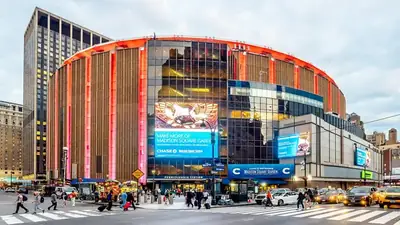
Some of the hottest tickets near classical music behave like pop tours. Andrea Bocelli, the Italian tenor, first made his name at Sanremo in 1994 and has record sales of roughly 90 million; his label bills 1997's Romanza as the top-selling album ever recorded in Italian. To mark that album's 30th anniversary, his 2026 North American tour played a September leg (8th to 21st) and a December leg (10th to 22nd), including two-night stands at Red Rocks Amphitheatre, the Hollywood Bowl and Madison Square Garden. Tickets went through card-member and fan presales before the general sale, just like an arena pop act.
The holidays bring the second surge. Trans-Siberian Orchestra plays arenas each November and December with its rock-meets-classical show, and orchestras' seasonal concerts and Nutcracker performances lift local demand. In theater, The Phantom of the Opera ended its record-long Broadway run in April 2023 and continues on a North American tour, which for many people is the first taste of operatic singing.
For concert listings across the city, the Philadelphia, Chicago and Boston guides are good starting points.
Concert etiquette in plain terms
- Skim the program first. Knowing how many movements (separate sections) a piece has tells you when it actually ends.
- Save applause for the end of a full work, unless the hall around you starts clapping between movements.
- Wear what you like. Casual clothes are fine in most American halls, although galas and opening nights skew formal.
- Be in your seat on time. Late arrivals are commonly kept outside until a break in the music, so read the house rules, such as the Hollywood Bowl policies, before you go.
Reserved Seat backs every order with a 100% guarantee.
Frequently asked questions
Are front-row seats good for an orchestra concert?
Not usually. Sitting that close and low, you mainly hear the strings in front of you rather than the full ensemble. The middle of the orchestra level or the first balcony's front rows sound more balanced.
What are seats behind the stage like at Walt Disney Concert Hall?
You look straight at the conductor and get an unusual balance of sound. Regulars often like them, but newcomers, and anyone hearing a singer, usually do better facing the stage.
Are lawn tickets at Tanglewood or Ravinia worth it?
For a relaxed summer evening, yes. You picnic and listen through speakers, though the orchestra itself will be hard to see.
When do orchestra and opera seasons run?
Indoor concerts and opera mostly run from fall into spring; the Met's season usually spans late September to early June. Summers move outdoors, to the Hollywood Bowl, Tanglewood, Ravinia and similar venues.
Is there a dress code for the symphony?
Usually not. Most US concert halls are casual, though opening nights and galas draw a dressier crowd.
Sources
- NEA, Arts Participation Patterns in 2022
- Wikipedia: Big Five (orchestras)
- Wikipedia: Carnegie Hall
- Wikipedia: Symphony Hall, Boston
- Wikipedia: Walt Disney Concert Hall
- Wikipedia: Metropolitan Opera
- Wikipedia: Tanglewood
- Wikipedia: Ravinia Festival
- Hollywood Bowl: 2026 season press release
- Wikipedia: Andrea Bocelli
- Business Wire: Andrea Bocelli announces 2026 Romanza 30th Anniversary North American tour