

Upcoming AfrikaBurn dates
Dates and live ticket listings appear here as soon as they are on sale. The guide below covers what to know before you buy.
AfrikaBurn Decisions That Come Before Packing
AfrikaBurn has no seats, no stage and no premium tier, so the decision you face is different from a typical festival purchase. You need three things lined up: a ticket registered in your own name, an E-Toll pass for any motorized vehicle you bring, and a plan to be fully self-sufficient for about a week. The organizers list the next edition as April 26 to May 2, 2027, on the Quaggafontein property in the Tankwa Karoo, the semi-desert on the border of South Africa's Western Cape and Northern Cape. The 2026 event ran April 27 to May 3. Capacity is limited to about 10,000 tickets.
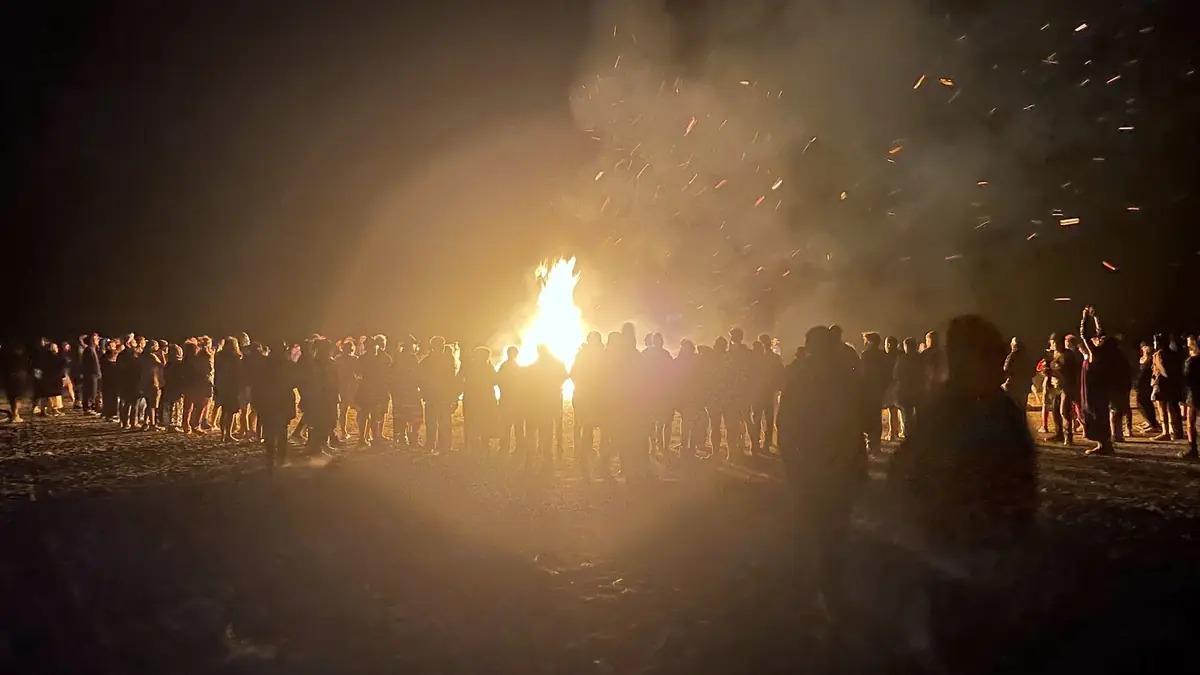
AfrikaBurn is an official regional event of Burning Man. Participants build a temporary settlement called Tankwa Town out of theme camps, large artworks, performances and art cars, and some of the art is burned late in the week. The event runs as a gift economy (nothing is bought or sold; people give freely), which is why your preparation matters more than your place in line.
Ticket Types and Who Each One Fits
Tickets are sold by the organizers through their ticketing partner, Quicket. Everyone inside gets identical access; the categories exist to set who pays what. Based on the organizers' ticket page for the 2026 cycle:
- Ground Up: the regular adult ticket, and the one most first-timers buy.
- Direct Distribution (DDT): released to people working on registered projects such as art, camps and mutant vehicles, priced the same as Ground Up.
- Subsidized: by application, for people on a very low income.
- Anathi program: by application, for historically excluded or economically disadvantaged groups.
- Kids (13 and younger) and Minors (14 to 17): each must be linked to an adult ticket, and minors to an adult over 28.
- Pensioner (over 70): free, with only 100 available.
- E-Toll vehicle pass: one per motorized vehicle, available with your ticket or at the gate.
If you are joining a camp or building something, ask the project lead early about DDT allocations; it is the most direct route in for contributors. Everyone else should plan around the Ground Up release.
Named Tickets, ID Checks and Face-Value Resale
This is where late buyers get caught. An AfrikaBurn ticket is tied to a named person, and the gate crew compares your photo ID with the ticket record. A ticket in someone else's name will not admit you unless it has been transferred into yours on Quicket. Transfers stay open until the last day the gates operate.
- No gate sales: you cannot buy entry on arrival.
- Face value only: the organizers have long asked the community to resell at the price paid.
- Quicket resale: the organizers' own system for returned tickets, and the cleanest route if a ticket needs a new owner.
The rule of thumb is simple. If a seller cannot move the ticket into your name through Quicket, assume it will not get you through the gate. For the warning signs in more detail, see the guides How to Avoid Ticket Scams and Are Resale Tickets Legit?
The Drive North and the R355
Nearly everyone drives in, usually from Cape Town, where international visitors land, rent a vehicle with good ground clearance and stock up before leaving. The organizers' wiki gives this route:
- North on the N1 for roughly 160 km (about 100 miles), through Paarl, Worcester and De Doorns.
- Left onto the R46 toward Ceres for about 40 km (25 miles).
- Right onto the R355 toward Calvinia, then about 55 km (34 miles) of gravel: 22 km beyond the Tankwa Padstal turnoff and 33 km more to the Quaggafontein gate.
That gravel alone takes around 90 minutes. A few points from the organizers are worth treating as rules:
- Fill the tank in Worcester or Touws River, the last dependable fuel stops.
- Carry two spare tires and a repair kit; the R355 has a reputation for punctures.
- Keep to 70 km/h (about 43 mph), or 50 km/h in a heavy vehicle, and never pass blind in dust.
- Do not trust GPS. Use the published directions and the road signs.
- Leave early in the morning to keep tires cooler and dodge glare.
Packing for a Week Without Shops
Radical self-reliance is meant literally. Ice, sold at a spot called Die Yskas, is the only thing for sale. There are no food vendors, bars, taps or showers.
- Water: at least 5 liters (about 1.3 gallons) per person per day, per the organizers, covering drinking, cooking and washing.
- Food: every meal for the whole stay, with a margin.
- Shelter: a tent or structure that stakes down hard, plus afternoon shade. Wind and dust arrive most days.
- Radio: Radio Free Tankwa, the community station, broadcasts updates.
- Something to give: a skill, a performance, a drink, a service. Contribution is how the gift economy functions.
- Trash capacity: everything goes home with you. Litter is called MOOP (matter out of place), and each camp is expected to leave its ground clean.
Check the Karoo forecast before departure, and read the first-timer pages on the organizers' Quaggapedia wiki.
Site Rules You Agree To at the Gate
AfrikaBurn uses the ten Burning Man principles, among them leave no trace, radical self-expression, radical self-reliance, decommodification and communal effort. In 2014 it added an eleventh, Each One Teach One, which asks veterans to pass the culture to newcomers. Decommodification here means no money, advertising, marketing or sales on site.
- Pets are not allowed.
- Fireworks, flares and fire lanterns are banned.
- Art cars must be heavily modified and licensed by the Department of Mutant Vehicles; e-bikes, scooters and similar vehicles above 400 watts fall under the same rules.
- Sound, generator, drone and media policies are published separately and revised from year to year.
These points reflect the organizers' material for the 2026 and 2027 cycles. Read the current event rules before you leave.
How a Cape Town Idea Became Tankwa Town
Africa Burns Creative Projects was formed in 2007 as a not-for-profit company to stage a South African Burning Man regional. The idea is credited to Paul Jorgensen, a Burning Man attendee, working with Robert Weinek and Liane Visser. The original name, Afrika Burns, became AfrikaBurn after community consultation, shifting the meaning from something happening to Africa to something happening in it.
Until 2019 every event used a private farm called Stonehenge beside the Tankwa Karoo National Park. In late 2019 the Mapula Trust gave two neighboring properties, Quaggafontein and Vaalfontein, to the organization, and the event moved about 30 km (19 miles) southeast to sit below Skoorsteenberg mountain. The dates had already shifted earlier in 2010, because the Southern Hemisphere autumn suits the event and keeps it well apart from Burning Man in Nevada.
- The San Clan: the central figure, based on San rock art of a group of people, fills the role of Burning Man's Man. Its burn moved from Saturday to Friday night to leave room for weather delays and a longer drive home.
- The Temple: a reflective structure, usually by a different artist each year, from Simon Bannister's works in 2012 to 2014 to Carmel Ives' in 2022, 2023 and 2024.
- The theme: a yearly prompt that inspires artists and camps without binding them.
Frequently asked questions
Which AfrikaBurn ticket should a first-timer buy?
Most first-timers buy a Ground Up ticket. If you are joining a registered art project, camp or mutant vehicle, ask its lead about a Direct Distribution Ticket, which costs the same.
What are the AfrikaBurn 2027 dates?
The organizers list April 26 to May 2, 2027, at Quaggafontein in the Tankwa Karoo. The 2026 event ran April 27 to May 3.
Do you need a vehicle pass for AfrikaBurn?
Yes. Every motorized vehicle needs an E-Toll pass, which you can buy with your ticket or at the gate. Tickets themselves are not sold at the gate.
What happens if the name on your AfrikaBurn ticket is not yours?
The gate checks photo ID against the ticket record, so it must first be transferred into your name on Quicket. Transfers are allowed until the last day the gates are open.
How much water should you bring to AfrikaBurn?
The organizers recommend at least 5 liters per person per day. Only ice is sold on site, and there are no taps or showers.
How long is the drive from Cape Town?
The published route is about 255 km, ending with roughly 55 km of gravel on the R355 that takes around an hour and a half. Allow most of a day.
Sources
- Wikipedia – AfrikaBurn
- AfrikaBurn – Official site (2027 dates, principles)
- AfrikaBurn – 2026 dates notice
- AfrikaBurn – The Event
- AfrikaBurn Tickets – ticket types, ID checks, transfers
- AfrikaBurn – Event rules and policies
- Quaggapedia – Main page (facilities, ice, showers)
- Quaggapedia – Getting there and directions
- Quaggapedia – Be waterwise