















Sideline first: the college hoops seat rule
Buy on the sideline. In almost every college arena, a lower-level seat along the side of the court is the best view in the building, and a seat near the free-throw line extended gives nearly the same picture as center court for less. The court itself is small, so anything in the bottom half of a campus building is close.
- Upper-level sideline: the usual value pick. Top rows of a small gym still feel near the action. In a big arena of around 20,000, take the front rows of the upper deck on the side rather than a corner.
- Behind the baskets: acceptable in a compact campus gym. In a big arena, the glass and the stanchion holding it up hide some of the opposite end, so the same money buys a better view on the side.
- Next to the students: maximum noise, and nobody sits down. Families hoping to stay seated should look across the court.
Women's games deserve a look too. Plenty of powerhouse programs sell women's seats that are easier to get and nearer the court.
Final Four seats in a football stadium
The men's Final Four plays by different rules. Since 2009 it has required a venue with at least 70,000 seats, so it lands in a domed football stadium, with temporary seating on the field and the court lifted roughly three feet on a stage.
- Front floor rows: excellent, right at the edge of the platform.
- Middle and back floor rows: the risky zone. The floor seating is flat, so you look across many rows of heads at a court that sits only slightly above you.
- First stadium tier, sideline: generally beats the middle of the floor because the seats are raked (stepped upward).
- Upper deck: so distant that the video board becomes your main view. Buy it for the occasion.
The women's semifinals and final use an arena, where the usual arena advice holds.
November to April in four phases
Demand climbs in steps as the season goes on. Division I men's play for 2025–26 began on November 3, 2025, a Monday, and each new season follows the same arc.
- Early season (November and December): made-for-TV tournaments, neutral-court showcases and home dates against lower-profile opponents. Unless a big-name matchup is on the card, seats are plentiful.
- League schedule (from late December or January into early March): rivals and ranked teams visit, and the campus buildings fill.
- League tournaments (the first half of March): seeding comes from the regular-season standings, and the champion collects an automatic NCAA berth.
- NCAA tournaments (mid-March into early April): lose-and-go-home brackets, the stretch fans call March Madness, finishing with the Final Four.
The men's and women's games share this calendar.
The 2027 bracket and where it lands
The men's NCAA tournament began in 1939, and the NCAA Men's Basketball Tournament page covers it in depth. Starting in 2027, both brackets grow by eight teams to 76. Conference champions fill 32 spots automatically; a committee chooses the other 44. That pushes the opening round to 12 games among 24 teams.
Men's 2027 sites
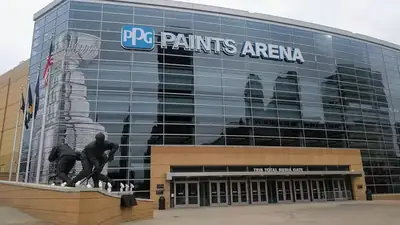
Dayton and Wichita stage the opening round on March 16–17. Eight arenas, including Pittsburgh's PPG Paints Arena, handle the first and second rounds. Regional weekends belong to Kansas City, San Antonio, New York's Madison Square Garden and Los Angeles's Crypto.com Arena. Detroit's Ford Field hosts the national semifinals on April 3 and the title game on April 5.
Men's Final Fours after that
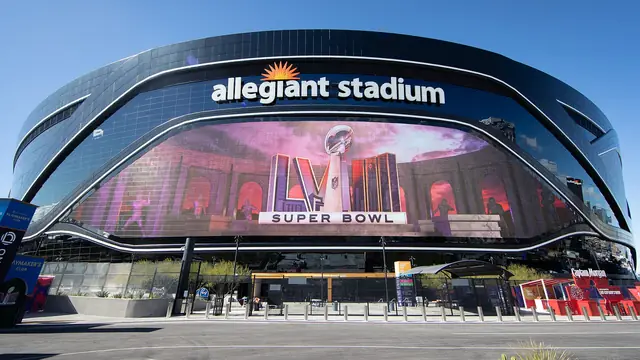
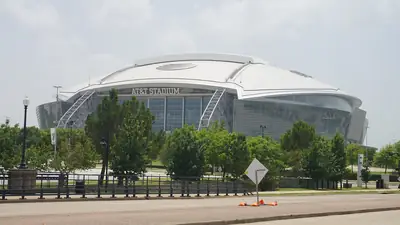
The rotation runs through Las Vegas (Allegiant Stadium, 2028), Indianapolis (Lucas Oil Stadium, 2029), Arlington (AT&T Stadium, 2030) and Atlanta (Mercedes-Benz Stadium, 2031).
Women's 2027 sites
Campus sites carry the women's bracket through its first three rounds, March 17 through 22. The regionals move to Las Vegas's T-Mobile Arena and Philadelphia's Xfinity Mobile Arena, and Columbus, Ohio, holds the Final Four at Nationwide Arena, with semifinals April 2 and the final April 4.
Recent results show how open the sport has become: Michigan took the 2026 men's crown in Indianapolis, 69–63 over UConn, and UCLA's women won in Phoenix, 79–51 against South Carolina. The Bruins' 11 men's titles and UConn's 12 women's titles remain the records. Crowds hold up too, with the NCAA reporting 351,777 at the 2025 women's tournament (its third-largest total ever) and a third consecutive men's tournament above 700,000 (NCAA).
Small, loud and old: arenas that sell out
From November through early March, the toughest tickets are often in old, cramped, deafening campus gyms, where a conference game can outsell an opening-weekend NCAA session.
- Cameron Indoor Stadium (Duke): Durham's 1940 gym holds about 9,300. For the marquee dates, North Carolina above all, students live for weeks in a tent camp known as Krzyzewskiville.
- Allen Fieldhouse (Kansas): open in Lawrence since 1955, with room for about 15,300. Guinness logged a 130.4-decibel reading there in 2017, and the Jayhawks win nearly 88 percent of home games.
- Rupp Arena (Kentucky): a Lexington building from 1976; a 2019 overhaul replaced the upper bleachers with chairbacks, leaving capacity near 20,500.
- The Palestra (Penn): Philadelphia's 1927 gym, about 8,700 seats, still nicknamed the Cathedral of College Basketball and still home to part of the Big 5 city series.
Not every great room is old. The Moody Center in Austin, opened in 2022, holds 10,763 for Texas Longhorns games.
Donor points, student pools and tournament books
Where you buy determines what you can get.
- School season tickets: full and partial plans sell first, and seats are assigned through priority points (a score that adds up giving history, consecutive years as a ticket holder and alumni ties). At high-demand schools, the best lower-level seats usually require a booster donation on top of the ticket.
- Students: a separate allocation handed out by lottery, by attendance points or, at Duke, by camping.
- Conference tournaments: all-session books (the same seat for every session) go on sale ahead of single sessions, and each school gets an allotment for its fans.
- NCAA tournament: host-site packages covering every session typically open in autumn, individual sessions in winter, and the NCAA operates an exchange for resale.
Resale fills in around those layers. Season-ticket holders list games they will skip, which is why November dates are easy and rivalry nights are not. At NCAA tournament sites, fans of teams knocked out on day one often list their remaining seats, so options can open up for the next session. Reserved Seat backs every order with a 100% guarantee.
Conference tournament week, session by session
Conference tournaments pack a lot of basketball into a few days on neutral floors, and an early-round ticket frequently covers a doubleheader or more.
- Big East: the men's tournament has called Madison Square Garden home since 1983, with a contract through 2028.
- ACC: the men's event alternates between Charlotte's Spectrum Center and the Greensboro coliseum through 2029; no city has hosted more often than Greensboro, with 30 tournaments.
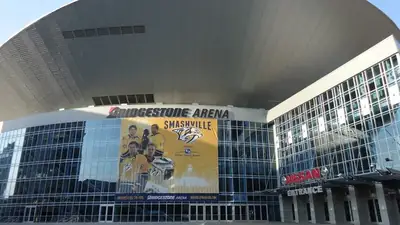
- SEC: all member schools play in, and Nashville's Bridgestone Arena is the customary site.
The pattern barely changes year to year. Opening days are the least expensive sessions. The quarterfinals, where the highest seeds make their debut, delivers the most quality basketball per ticket. Semifinals and the final draw the heaviest demand, with prices that rise or fall depending on who survives.
Game-day details for newcomers
- Arrive before tip-off. The band and the student section warm up early, and that pregame noise is part of the show.
- Expect a clear-bag rule. As of the 2025–26 season, a lot of arenas and NCAA host sites only admit small transparent bags; check the building's current rule.
- Leave the cash. Ford Field, the 2027 Final Four site, is one of many cashless venues.
- Eat before or inside. Once you leave an NCAA tournament session, you cannot come back in.
For bracket-week planning, use the NCAA's Final Four visitor information.
Frequently asked questions
Are seats behind the basket bad at a college game?
In a small campus gym they are fine. In a large arena the glass and its support hide part of the opposite end, so a sideline seat at a similar price sees more.
Where should I sit at the Final Four?
Front floor rows and the lowest stadium tier on the sideline are the safest picks. Mid-floor and rear-floor rows are flat, and from the upper deck the video board becomes your main view.
Do NCAA tournament tickets get easier after the first day?
Often, yes. Fans of teams eliminated in the first session at a site frequently list their tickets for the next session.
How big is March Madness starting in 2027?
Seventy-six teams in each bracket, men's and women's: 32 conference champions plus 44 picked by the selection committee.
Where are the 2027 Final Fours?
Detroit's Ford Field hosts the men on April 3 and 5, 2027, and Nationwide Arena in Columbus, Ohio, hosts the women on April 2 and 4.
Sources
- Wikipedia – NCAA Division I men's basketball tournament
- NCAA.com – Future Final Four sites and 2027 preliminary sites
- NCAA.com – Final Four Know Before You Go
- NCAA Tickets – March Madness tickets
- NCAA.com – 2027 women's tournament schedule
- Wikipedia – NCAA Division I women's basketball tournament
- Wikipedia – 2026 NCAA Division I women's basketball tournament
- Wikipedia – 2026 NCAA Division I men's basketball tournament
- NCAA – Record crowds highlight 2025 NCAA basketball championships
- Warner Bros. Discovery press – 2025–26 season tips off November 3
- Wikipedia – College basketball
- Wikipedia – Cameron Indoor Stadium