
Your fight-night seat, decided
For most fans, the low to middle rows of the lower bowl are the best seats at a boxing match. From there you look down onto the canvas, which is where footwork, angles and combinations make sense. The flat floor behind the first few rows is the weakest buy in a typical layout.
The reason is the ring itself: a raised, roped square in the middle of the floor. The ropes barely interrupt the view, unlike a UFC cage, but the platform puts floor-level fans below the action. Once the crowd stands for a big exchange, the back half of the floor sees mostly heads and video screens.
Three quick filters before you reserve:
- Height over proximity. A lower-bowl seat ten rows up usually beats a floor seat twenty rows back.
- Watch for the walkout path. Listings behind the fighters' entrance route or a broadcast platform can lose part of the ring.
- Keep a screen in sight. Replays and close-ups explain what happened in a fast flurry.
Ringside to upper deck: what each zone costs you
Ringside
The first rows around the apron go largely to media, judges, the athletic commissions, promoters and premium buyers. You are close enough to hear punches land, but you look up at the canvas, and a fighter pinned on the near ropes can vanish below the apron edge.
Middle and rear floor
Flat seating, a standing crowd and long sightlines. By the last rows you are effectively watching the broadcast on the screens. This zone is the main area to skip.
Lower bowl
The sweet spot. Low to middle rows look down on the ring at a comfortable angle, close enough for detail and high enough to follow movement.
Stadium upper decks
At a stadium fight, the ring is tiny from the top level. These seats buy you the atmosphere of a huge night, not a view of the punches, and you will follow most of the action on the video boards.
Building-specific detail is on the T-Mobile Arena Seating Chart and Madison Square Garden Seating Chart pages.
Cards, rounds and when the headliners walk out
Pro boxing has no regular season. A promoter assembles each event as a card: a string of undercard bouts (the early fights), a co-feature, and the main event that drives ticket demand. One ticket admits you for the full night.
Rounds generally last three minutes with a minute of rest, and title fights are scheduled for as many as twelve. A main event that goes the full distance takes about 47 minutes, which is why headliners usually enter late, after hours of preliminary bouts. Streamed cards built around a US prime-time audience push the main event later still.
Arriving early costs nothing extra, and the undercard is often where tomorrow's headliners are fighting today.
Sanctioning bodies and why super fights are rare
Four organizations hand out the major world titles: the World Boxing Association (WBA), the World Boxing Council (WBC), the International Boxing Federation (IBF) and the World Boxing Organization (WBO). Hold all four in one division and you are the undisputed champion. The sport has 17 weight classes, capped by heavyweight, which has no upper limit.
Fighters are signed to rival promoters and broadcasters, so the biggest pairings can take years to negotiate. That scarcity is what lets a genuine super fight fill a stadium. Two recent shifts shape what reaches US venues:
- Zuffa Boxing launched in 2024 as a joint venture between the Saudi entertainment company Sela and TKO Group Holdings, the parent of the UFC and WWE. It brings the UFC's promotional approach to boxing, and its events stream on Paramount+ under a September 2025 agreement, with selected bouts on CBS.
- Streaming mega-events have drawn enormous audiences, with Netflix carrying Jake Paul vs. Mike Tyson in 2024 and Canelo Álvarez vs. Terence Crawford in 2025.
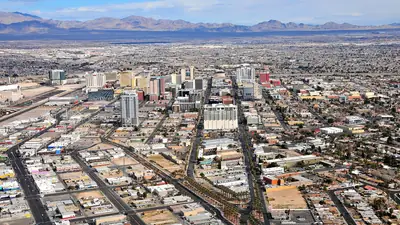
From the Garden to the Las Vegas Strip
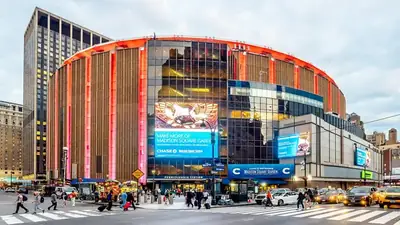
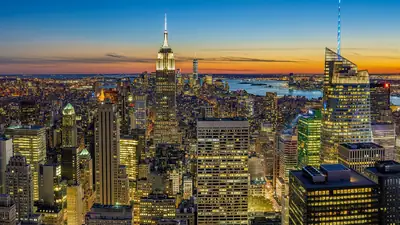
Madison Square Garden in New York City made boxing a big-city event in America. Its ring stayed in service for 82 years before being retired in 2007, and the first Muhammad Ali vs. Joe Frazier bout, on March 8, 1971, sold out at 20,455. The marquee fights later drifted to Las Vegas, where casino money supported larger purses.
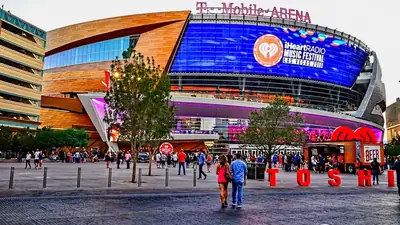
- T-Mobile Arena holds about 20,000 for boxing. It staged Canelo Álvarez vs. Gennady Golovkin and Floyd Mayweather Jr. vs. Conor McGregor, both in 2017.
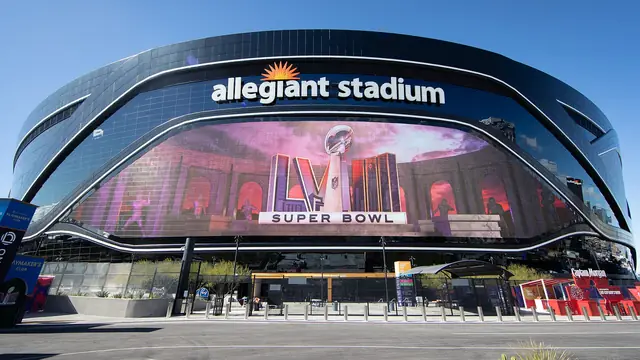
- Allegiant Stadium held its first fight on September 13, 2025, when Canelo Álvarez met Terence Crawford before 70,482 people, the stadium's biggest crowd, with a reported one-day gate of 47.2 million dollars.
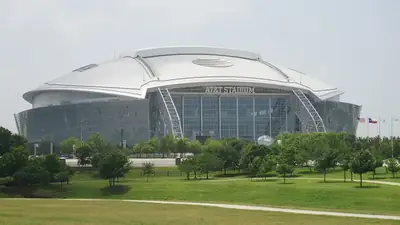
- AT&T Stadium in Arlington, Texas, packed in 72,300 for Jake Paul vs. Mike Tyson on November 15, 2024.
Las Vegas fight calendars tend to bunch around two holiday weekends, Cinco de Mayo in May and Mexican Independence Day in September, both long favored by Canelo Álvarez.
Buying fight tickets on a short clock
- Expect short notice. Cards are often locked in only weeks or a few months ahead, so the buying window is tighter than in team sports.
- Follow the headliner. A crossover star can sell out a stadium; a strong title fight without a household name may still have seats on fight night.
- Watch for changes. If a main-event fighter withdraws, the card may be postponed or a substitute added, and resale prices can move sharply in either direction. Read the event terms whenever the headliner changes.
- Plan stadium logistics. Stadium fights mean earlier gates, longer security lines and a slow exit. Arrange your ride home in advance.
- Check the bag policy. Arenas and stadiums set their own rules and change them; look at the venue's current policy shortly before the event.
Reserved Seat orders include guaranteed entry, but how a postponed fight is handled depends on the event, so follow announcements from the promoter and venue. Confirmed dates appear on the event pages for Madison Square Garden and T-Mobile Arena. Boxing shares many of its venues, and much of its buying pattern, with UFC and MMA cards.
Frequently asked questions
Are floor seats good at a boxing match?
Only the first rows. Because the floor is flat and the ring is raised, the middle and rear floor sit below the action and lose the view when fans stand. Low lower-bowl rows usually see more.
What time does the main event start?
Usually late in the evening local time, after several undercard bouts. Streamed cards aimed at a US prime-time audience often run later still.
What happens if the headliner pulls out?
The event may be postponed or a replacement fighter added, and resale prices can swing either way. Check the event terms and announcements from the promoter and venue.
What does undisputed champion mean in boxing?
The fighter holds the world titles of all four major sanctioning bodies in one weight class: the WBA, WBC, IBF and WBO.
How long is a championship fight?
Up to twelve three-minute rounds, with a minute of rest between rounds, or about 47 minutes if it goes the distance.