








Seat strategy for a WNBA game
Aim for the lower level along the sideline, roughly rows 8 to 20. That height clears the heads in the front rows, keeps both baskets in view and lets you watch sets develop. The good news for WNBA fans is that the lower bowl (the sections nearest the court) carries a bigger share of the crowd than at an NBA game, so those seats are often within reach even in a large building.
- Courtside and front rows: players and benches are steps away. In a compact venue, row five can feel nearly as close.
- Behind the baskets: less expensive and fine for watching one end, but you lose depth and the far end feels remote. Low rows behind the basket support can lose part of the court.
- Upper level in an NBA arena: a long way from a basketball-size court. On an ordinary night, take a corner seat downstairs over a sideline seat upstairs; teams sometimes shut the upper deck entirely when sales are soft.
- Bench sides: behind the visitors' bench you overhear the opponent's timeouts; the noise peaks on the side behind the home team's bench.
In the two smallest buildings, the Atlanta and Washington arenas, no seat is far away, and the decision comes down to sideline or end.
Home arenas, big and small
The building tells you which seats matter. Capacities below come from the league's 2026 team table and shift with configuration.
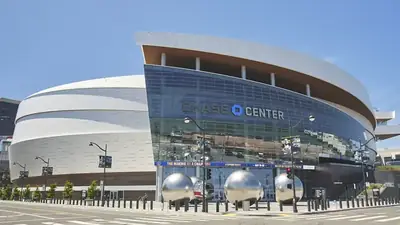
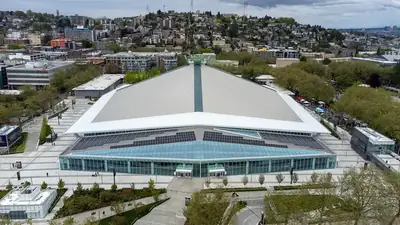
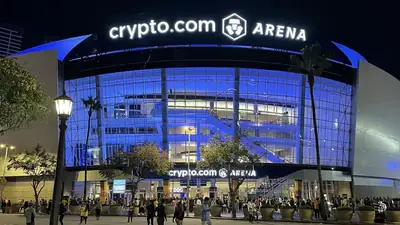
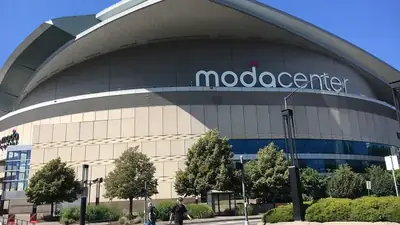
- NBA- and NHL-size buildings: Barclays Center (New York Liberty), Chase Center (Golden State Valkyries), Climate Pledge Arena (Seattle Storm), Crypto.com Arena (Los Angeles Sparks), Gainbridge Fieldhouse (Indiana Fever), Moda Center (Portland Fire), Mortgage Matchup Center (Phoenix Mercury) and Target Center (Minnesota Lynx).
- Compact venues, smallest first: Gateway Center Arena, about 3,500 (Atlanta Dream); CareFirst Arena, about 4,200 (Washington Mystics); College Park Center in Arlington, about 7,000 (Dallas Wings); Coca-Cola Coliseum, about 8,700 (Toronto Tempo); Mohegan Sun Arena, about 9,300 (Connecticut Sun); Wintrust Arena, about 10,400 (Chicago Sky); and Michelob Ultra Arena, about 12,000 (Las Vegas Aces).
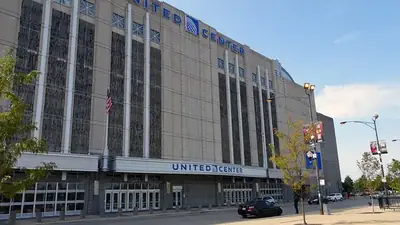
Teams with small arenas sometimes shift big games to a larger building nearby; the regular-season attendance record of 20,711 came from a Mystics–Fever game in the nation's capital. A moved game means an entirely different seating chart, so check the venue named on the listing. Chicago's United Center hosted the 2026 All-Star Game on July 25.
Season shape and playoff format
North America's top women's pro basketball league, the WNBA (Women's National Basketball Association), fields 15 teams in 2026. The regular season runs May into September; the postseason follows, and lately the Finals have wrapped up in October. Each club had a 44-game slate in 2025, roughly 22 of them at home, and 2026 tipped off as planned on May 8 after a new collective bargaining agreement was ratified in March 2026.
- Regular season: May to September, broken by the All-Star Game in July.
- Commissioner's Cup: since 2021, selected regular-season games double as an in-season tournament that ends with one Cup Final around the turn of June and July.
- Playoffs: the eight best records qualify, with no conference split. Series lengths grow by round: three games, then five, then a seven-game Finals (the format since 2025).
The league formed in April 1996 with NBA support and tipped off its first season in 1997. Growth is fast: Golden State arrived in 2025, Toronto and Portland in 2026, and Philadelphia, Detroit and Cleveland have franchises due between 2028 and 2030, which would make 18 teams. The schedule is set to rise to 50 games in 2027.
Which games sell out, and why
Interest jumped from 2024 on. The 2024 draft drew an average audience of 2.45 million, more than quadruple the previous high, and the 2024 Finals had the league's biggest audience in 25 years. Attendance totaled 3,142,082 in 2025, about 10,986 a game. Deloitte projects worldwide revenue for elite women's sports of 3 billion dollars or more in 2026, notes that North America produced 53 percent of the 2025 total, and finds women's teams still lag men's in repeat season ticket holders, so more fans buy one game at a time (Deloitte, 2026; these are global forecasts, not US figures).
- Star road trips: when the biggest names visit, Indiana Fever away games in particular, crowds run far above the host team's normal level.
- New franchises: Golden State drew 18,064 a game in 2025, a sellout every night.
- Tiny arenas: 4,000 seats go much faster than 17,000, so a popular opponent can leave resale as the only route in.
- Playoff games: later games in a series are scheduled only if needed, so a Game 3 ticket in a best-of-five appears late and moves with the series.
A midweek game against an ordinary opponent in a big arena usually stays easy to buy right up to tip-off. Every Reserved Seat order is backed by a 100% guarantee.
Title history in brief
Three franchises have four championships each: Seattle, Minnesota and the defunct Houston Comets, who were the original powerhouse. New York's Liberty broke through for a first title in 2024. In 2025 the Las Vegas Aces took their third, beating Phoenix three games to one in the debut of the seven-game Finals, and on June 30, 2026, the Aces beat the Liberty in the Commissioner's Cup Final.
Rosters and coaches change every year, and the 2025 and 2026 expansion drafts moved players across several teams, so look up current rosters rather than last season's names. For the men's game, played in many of the same arenas, see the NBA hub.
Game-night checklist
- Check the address on the ticket. A few teams play selected games in a larger arena.
- Come early for warmups. Doors open at a time each team sets, and in the small arenas you watch warmups from a few feet away.
- Look up the bag rules. Big-league arenas generally carry their own rules over to WNBA nights, and as of 2026 those rules differ from one building to the next; confirm the current policy before leaving home.
- Budget about two hours. Regulation is four quarters of 10 minutes.
- Keep fall weekends open. Postseason home dates get fixed late, so if your team is contending, hold September and October weekends.
Schedules and standings are posted at WNBA.com.
Frequently asked questions
Is it easier to get lower-level seats at a WNBA game than an NBA game?
Often, yes. More of a WNBA crowd sits downstairs, so lower sideline seats are frequently available even in large buildings.
Are upper-deck seats a good idea in a big arena?
Usually not for a regular game. The upper level of an NBA arena is far from the court, and a lower corner seat typically gives a better view.
How many games does each WNBA team play?
The 2025 schedule had 44 games per team, half of them at home. That number is scheduled to reach 50 in 2027.
Which WNBA teams play in the smallest arenas?
Per the league's 2026 team table, Gateway Center Arena, home of the Atlanta Dream, holds about 3,500, and CareFirst Arena, home of the Washington Mystics, about 4,200.
Who won the most recent WNBA championship?
Las Vegas. The Aces claimed their third championship in 2025, taking the Finals from Phoenix three games to one.