


The Big East seat decision, made simple
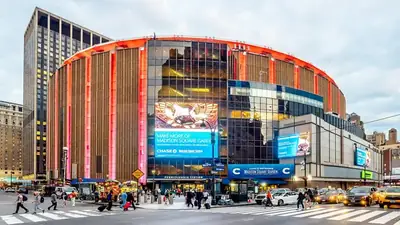
Start with the building, then the side. Big East schools play in two very different kinds of venue: small campus gyms where almost every seat is close, and large pro arenas where the sideline matters a great deal. At Madison Square Garden, which hosts the conference tournament and most St. John's home games, the low rows of the 200 level along the sideline usually give the best mix of view and value.
Its upper bowl rises sharply and is pulled in tight to the court compared with newer arenas, so a sideline seat up there still shows the full floor and both benches. Corner seats in the lower bowl are a fair compromise. The seats to avoid are the high rows behind either basket: depth on every jump shot disappears, and you end up watching the video board. For section numbers, use the Madison Square Garden Seating Chart.
With no football in the league, the whole ticket calendar is basketball: men's games from November into March, the tournament in New York, and a women's program led by UConn.
Campus gym or pro arena: two different nights
Several members play in buildings that also host NBA or NHL teams. Others play in compact field houses. The seat logic changes with the venue.
Campus buildings
Hinkle Fieldhouse, Cintas Center and Gampel Pavilion put fans right on top of the action. Here, closeness is worth paying for, and the student section sets the noise level for the whole room. Almost no seat is truly bad.
Pro arenas
In the NBA and NHL buildings that Creighton, Marquette, Seton Hall and Georgetown call home, lower-bowl sideline seats are the obvious choice. Upper-level seats for a routine regular-season game are often among the easiest tickets in the league to find, since the buildings are larger than the typical crowd.
Schools with two homes
UConn and Villanova split their schedules between an on-campus gym and a downtown arena. Check which building your game is in before you buy. The campus gym is louder and more intimate; the big arena has more seats, more parking and a more spread-out crowd.
Eleven members and their buildings
Capacities below are the men's basketball figures listed on Wikipedia.
- Hinkle Fieldhouse (Butler, Indianapolis): roughly 9,100
- CHI Health Center Omaha (Creighton): roughly 18,320
- Wintrust Arena (DePaul, Chicago): roughly 10,387
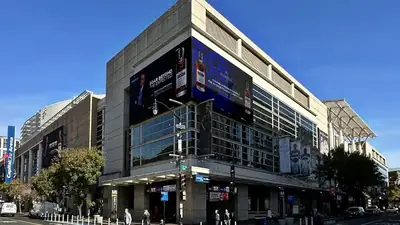
- Capital One Arena (Georgetown, Washington, D.C.): roughly 20,035
- Fiserv Forum (Marquette, Milwaukee): roughly 18,850
- Amica Mutual Pavilion (Providence): roughly 12,400
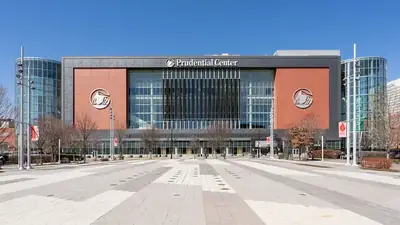
- Prudential Center (Seton Hall, Newark): roughly 18,711
- Madison Square Garden (St. John's): most home dates, plus a few early non-league games on campus at Carnesecca Arena in Queens
- Gampel Pavilion and PeoplesBank Arena (UConn): the Storrs campus gym and the Hartford arena
- Finneran Pavilion and Xfinity Mobile Arena (Villanova): the campus gym and the Philadelphia arena
- Cintas Center (Xavier, Cincinnati): roughly 10,250
Prudential Center, Capital One Arena and Madison Square Garden each have a full venue guide, and the Chicago, Philadelphia, Washington, D.C. and New York City guides cover the rest of a trip.
The league itself has two lives. The first Big East took shape in 1979: four founders (Georgetown, Providence, Syracuse and St. John's) recruited Boston College, Holy Cross, Rutgers, Seton Hall and UConn. Today's version dates to July 1, 2013, when the basketball-first Catholic schools broke away from the members that played football. Xavier, Butler and Creighton came in at that moment, and UConn rejoined in 2020.
March at the Garden: what happens and when
Every men's Big East tournament since 1983 has been played in Madison Square Garden, a longer run at one site than any other conference tournament in the sport, and the agreement with the Garden extends through 2028. All 11 teams enter a single-elimination bracket in the days just before the NCAA field is revealed.
The Garden has hosted some of the most retold nights in college basketball. Syracuse and UConn needed six overtimes in 2009, starting on the night of March 12 and wrapping up nearly four hours on, which ranks as the second-longest game in NCAA history. In 2011 Kemba Walker carried UConn through five wins in five days, a feat no other team has matched. Georgetown and UConn each own eight tournament titles, and St. John's won back to back in 2025 and 2026, beating Creighton in the first of those finals and UConn in the second.
The women's bracket is a separate event in Uncasville, Connecticut, at Mohegan Sun Arena, which took it over in 2021. UConn owns 24 of those titles and has not lost the event in the 2021–2026 span.
Buying tournament sessions without overpaying
Tournament tickets usually come by session (one ticket admits you to a block of games, often two) or as a package covering every session. Early sessions are the easiest to buy. Demand rises through the quarterfinals and tops out for the semifinals and final, especially if St. John's, effectively the home team at the Garden, or a short-trip school such as Seton Hall, UConn or Villanova is still playing.
- Top-seed fans: a full package can make sense, since your team is likely to play deep into the week.
- Everyone else: wait for the bracket, buy only the session your team is in, and add the next one on resale after a win.
- Timing: resale prices often shift overnight after each round, when fans of eliminated schools list what they no longer need.
Sit on your team's side. Each fan base gathers near its bench and band, so the right side of the building puts you with your own crowd. In a two-game quarterfinal session, your neighbors may change between games. Reserved Seat backs every order with a 100% guarantee.
For the conference, the real prize comes afterward in the NCAA Men's Basketball Tournament, which the NCAA reported topped 700,000 in attendance for a third consecutive year in 2025, per its championship recap.
Six titles, big cities and game-day logistics
Since 1984 Big East programs have won six national championships: one for Georgetown (1984), three for Villanova (1985, 2016, 2018) and two for UConn (2023, 2024). Add the metro-area arenas, and you can see why a February league game can feel like the postseason.
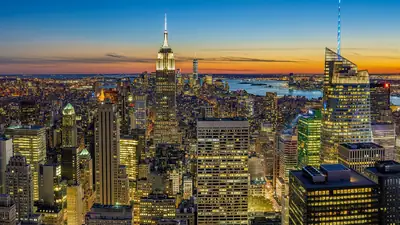
- Take the train to the Garden. The arena sits on top of Penn Station, and a March weeknight drive into Midtown wastes time and money.
- Confirm the venue. UConn and Villanova home games may be in either of two buildings.
- Budget your time. Plan on four-plus hours for a doubleheader session.
- Check the bag rule. Each pro arena sets its own bag policy; confirm it shortly before game day.
The conference posts schedules and tournament details at bigeast.com.
Frequently asked questions
What is the best value seat at the Big East tournament?
Low rows of the 200 level along the sideline at Madison Square Garden. The upper bowl is steep and close to the court, so you see the whole floor without paying lower-bowl prices.
Should I sit near my team's bench at the tournament?
Yes, if you want to be with your own fans. Each school's supporters and band gather near its bench, so that side of the arena has the most familiar crowd.
Do UConn and Villanova always play in the same arena?
No. Both split home games between a campus gym and a larger arena, Gampel Pavilion or PeoplesBank Arena for UConn and Finneran Pavilion or Xfinity Mobile Arena for Villanova. Check the venue before buying.
Is there Big East football?
No. Football is not a Big East sport. UConn fields an FBS football team, but it plays under a different arrangement.
Where is the women's Big East tournament held?
Mohegan Sun Arena in Uncasville, Connecticut, has hosted it since 2021, while the men keep playing at Madison Square Garden.