

Choosing seats across four college sports
The quick version: for football, sit on the sideline between the 30-yard lines with the sun behind you; for basketball, sit on the lower-level sideline; for baseball and softball, sit behind home plate or along a baseline. Those are the safest choices in nearly any college venue.
Football
Between the 30s you see every play develop. For a September day game, put the sun behind you; squinting into it for three hours is miserable, and in the heat of the South a shaded row beats a better yard line. The students, typically packed into an end zone or a corner, make the most noise and never sit down. Visiting fans are usually grouped toward one end as well; neutral fans can sit near it without trouble, home fans may prefer not to.
Basketball
Lower sideline first, upper sideline for value. In big arenas, a seat straight behind the hoop has the glass and its support in the way of the opposite end.
Baseball and softball
Behind the plate and along first or third base you are right on top of the pitching and the bang-bang plays. The outfield and any general-admission berm are the easygoing, budget-friendly choice.
Football Saturdays and the biggest stadiums
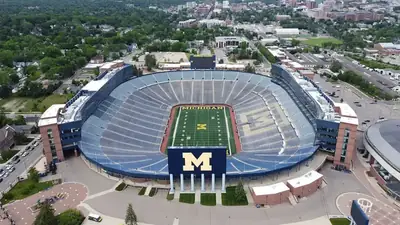
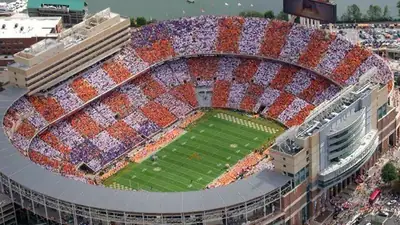
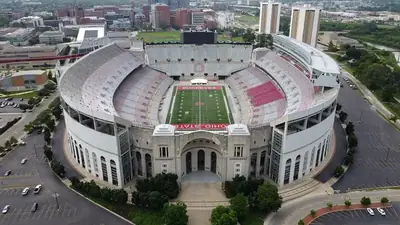
Football powers the college ticket market, and the country's largest stadiums sit on campuses. Michigan Stadium holds 107,601. Four more clear 100,000: Tiger Stadium, Kyle Field, Neyland Stadium and Ohio Stadium. Team pages such as Notre Dame Fighting Irish Football, Texas Longhorns football, Ohio State Buckeyes Football and Michigan Wolverines Football break down each team's stadium, rivals and best sections.
Most of the demand belongs to the Football Bowl Subdivision (FBS, Division I's top football tier) and the power conferences: the ACC, the Big Ten, the Big 12 and the SEC, with the Big East joining that group in basketball. Many classic rivalries land on the last regular-season weekends of late November, the strongest stretch of the season for demand. Kickoff times are often set only after television picks, close to game week, so plan travel with some slack.
From rivalry week to January
Conference title games fill early December, and the postseason runs from there into January.
- The Army-Navy Game counts as a regular-season game; it moves between host stadiums and is played on December's second Saturday.
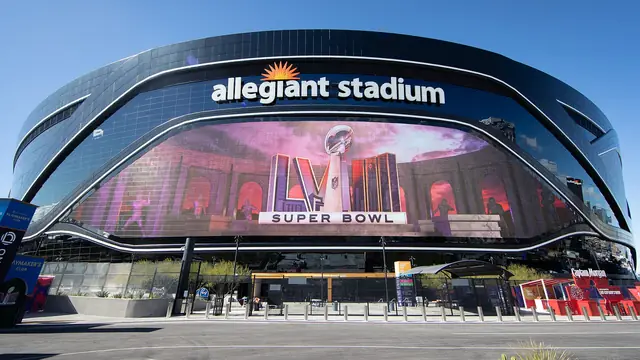
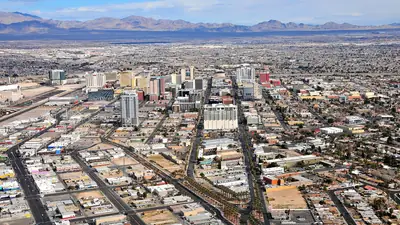
- The playoff expanded to 12 teams for 2024. Higher seeds host first-round games in mid-December, the New Year's Six bowls stage the next two rounds, and the College Football Playoff National Championship lands in Las Vegas, at Allegiant Stadium, on January 25, 2027.
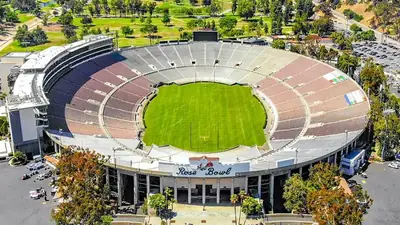
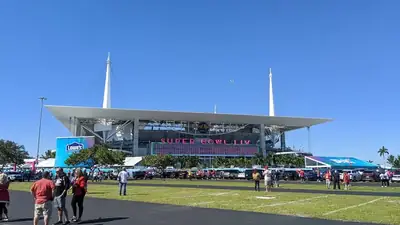
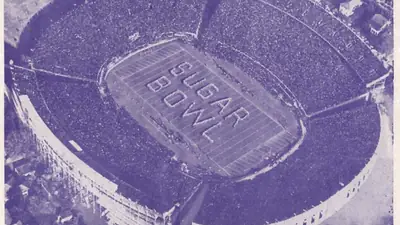
- The bowls: the 2026–27 schedule lists 47 FBS bowl games starting December 12, among them the Celebration Bowl, the Orange Bowl, the Sugar Bowl and the Rose Bowl Game.
College Bowl Games lays out every date and which conferences feed which bowl. Title-game seats mostly flow to the two finalists, and each school sells its share to its donors.
March, then Omaha and Oklahoma City
Beyond football, three NCAA championships draw fans from across the country.
March Madness
Starting in 2027, the NCAA Men's Basketball Tournament and the women's bracket each take 76 teams. Detroit's Ford Field closes the men's event (April 3 and 5), and Columbus, Ohio, closes the women's at Nationwide Arena (April 2 and 4). NCAA figures put the 2025 women's tournament at 351,777 fans and the men's event above 700,000 for a third year in a row. The College Basketball hub covers seats, sessions and sites.
College World Series
Every June, eight baseball teams gather in Omaha, Nebraska, for two double-elimination brackets and a best-of-three final. Omaha has hosted since 1950, and the current ballpark, Charles Schwab Field Omaha, since 2011. The 2026 champion was Oklahoma, over North Carolina.
Women's College World Series
Softball's finale, with the same eight-team setup, is played at Devon Park around the turn of May into June. Apart from 1996, Oklahoma City has hosted every edition since 1990.
Who gets seats first in college athletics
College tickets move through a priority order, and knowing it explains why public sales for big games are so thin.
- Donors: most schools order buyers by priority points, which reward yearly donations, total giving over time, unbroken season-ticket renewals and being an alum. Cal is a typical case: its points govern where season seats go, who gets which parking, single-game access and postseason requests. At high-demand schools, the best seats also require an annual gift beyond the ticket itself.
- Season-ticket holders: served before any single-game sale, and often the only direct route into a home rivalry game.
- Students: a separate pool, handed out by lottery, loyalty points or, for Duke basketball's biggest games, weeks of camping in a tent village. Schools set their own rules on transferring student tickets, so check before buying one on resale.
- The visitors: the opposing school normally receives an allotment to sell to its supporters.
- The NCAA: March Madness goes on sale as full-site packages and then individual sessions, backed by an NCAA-run resale exchange.
With the prime seats concentrated among donors and renewal holders, the secondary market is the practical route for anyone without that history who wants a sellout rivalry or a Final Four seat. Reserved Seat backs every order with a 100% guarantee.
A calendar and checklist for first-timers
- Late August to January: football, from the regular season through conference title games, bowls and the playoff.
- November to early April: basketball, from campus games to conference tournaments and March Madness.
- Late winter to June: baseball and softball, ending in Oklahoma City and Omaha.
Before you go:
- Expect a clear-bag rule. It was standard at large campus stadiums and NCAA title sites as of 2025; confirm the current version.
- Plan for the tailgate. At the big programs, parking fills long before kickoff, and some lots are donor-only.
- Move early for rivalries and championships. Two traveling fan bases squeeze supply fast.
- Read the conference hubs. The ACC and SEC hubs go deeper on each league.
Ticket rules are posted by NCAA Tickets for March Madness and with the College Football Playoff for the playoff.
Frequently asked questions
Where should I sit at a college football game?
Between the 30-yard lines on whichever side keeps the sun behind you for a day kickoff. The student section is the loudest area, and everyone there stands.
Why do donors get the best college tickets?
Schools usually rank buyers by priority points earned through donations, renewal history and alumni status, then seat them in that order. Fans without those points mostly use resale for big games.
Who gets College Football Playoff title game tickets?
The two finalists receive most of them and sell to their donors. The 2027 game is January 25 in Las Vegas, at Allegiant Stadium.
When is the College World Series?
Each June in Omaha, Nebraska, at Charles Schwab Field Omaha. Softball's version is held around the end of May or start of June at Devon Park in Oklahoma City.
Can I buy a student section ticket on resale?
Student seats are meant for enrolled students, and transfer rules vary by school. Read that school's policy first.
Sources
- Wikipedia – College Football Playoff
- Wikipedia – 2026–27 NCAA football bowl games
- College Football Playoff – Tickets
- Wikipedia – Michigan Stadium
- Wikipedia – Kyle Field
- Wikipedia – Tiger Stadium (LSU)
- Wikipedia – Neyland Stadium
- Wikipedia – Ohio Stadium
- NCAA.com – Future Final Four sites
- NCAA.com – 2027 women's tournament schedule
- NCAA – Record crowds highlight 2025 NCAA basketball championships
- NCAA Tickets – March Madness tickets