
Big 12 seats: the quick call
For a Big 12 football game, buy on the sideline between the 30-yard lines, at least 15 rows up, on the side that keeps the sun behind you for a day kickoff. For a Big 12 basketball game, buy along the sideline 10 to 20 rows from the floor. Those two rules cover most of what separates a good seat from an expensive mistake in this conference.
The league's stadiums are mid-sized, which changes the math. No Big 12 venue approaches 100,000 seats. BYU's LaVell Edwards Stadium, at 62,073, is one of the largest, and Kansas is playing in a stadium of roughly 32,000 during construction in 2026. Smaller buildings mean better sightlines from the upper rows than in a giant bowl, so an upper-deck sideline seat here is often a sound value. They also mean fewer seats for a big game, and a small allotment for the visiting school. Road fans usually buy individually on the resale market and end up spread across the stadium rather than in one block.
Avoid the low end-zone rows. From rows 1 to 10 behind the goal line, the far half of the field flattens out and the players on the near sideline block much of the view.
Heat, altitude and four time zones
The league now runs from Florida to Utah, and the setting affects the seat you want.
- Early-season heat: September day games in Texas, Arizona and Florida can be brutal in the sun. In a stadium with a north-south field, the west stands put the afternoon sun at your back and usually fall into shade first. Check the stadium's orientation on the seating chart before you choose a side.
- Late-season cold: Utah's Rice-Eccles Stadium sits at about 4,637 feet, and Colorado plays at altitude in Boulder. November night games at either one get cold, so a seat in the sun matters less than layers.
- Kickoff clocks: schedules span Eastern to Mountain time, and most school sites list kickoffs in the home team's zone. Confirm the local time when you plan travel.
Many campuses are in smaller college towns, so hotel rooms on a home Saturday go early. Book lodging before you buy if you are traveling for a rivalry game.
The sixteen schools, by region
The Big 12 was founded in 1994 and is based in Irving, Texas, but realignment remade it in two steps. BYU, Cincinnati, Houston and UCF came aboard in 2023. A year later Arizona, Arizona State, Colorado and Utah left the Pac-12 for the Big 12 (Colorado returning after its 2011 exit), while Texas and Oklahoma departed for the SEC.
- Texas and Oklahoma: Baylor Bears Football, Houston Cougars Football, TCU Horned Frogs Football, Texas Tech Red Raiders Football and Oklahoma State Cowboys Football.
- Plains and Ohio Valley: Iowa State Cyclones Football, Kansas Jayhawks Football, Kansas State Wildcats Football and Cincinnati Bearcats Football.
- Mountains and desert: Arizona Wildcats Football, Arizona State Sun Devils Football, BYU Cougars Football, Colorado Buffaloes Football and Utah Utes Football.
- The East: UCF Knights Football and West Virginia Mountaineers Football.
Each program page covers that school's stadium in detail, including the student section, the visitors' area and the shade side.
Which Big 12 games are hardest to get
Realignment held some long series together inside the league and added others. These are the matchups that reliably tighten supply:
- Arizona vs. Arizona State for the Territorial Cup, a league game again.
- Baylor vs. TCU, a Texas series that goes back to 1899.
- BYU vs. Utah, the Beehive Boot game, back on the conference schedule.
- Iowa State vs. Kansas State, billed as the longest uninterrupted rivalry in the conference.
Outside those games, three things push demand up: a ranked opponent in October or November, a visiting fan base within driving distance (two Texas schools, or the Kansas pairing), and a night kickoff on national television. Television partners often set kickoff times only a week or two ahead, so prices on resale can jump once a game lands in prime time. September non-conference games against smaller programs leave you the widest choice of seats all year.
Arlington in December, bowls after that
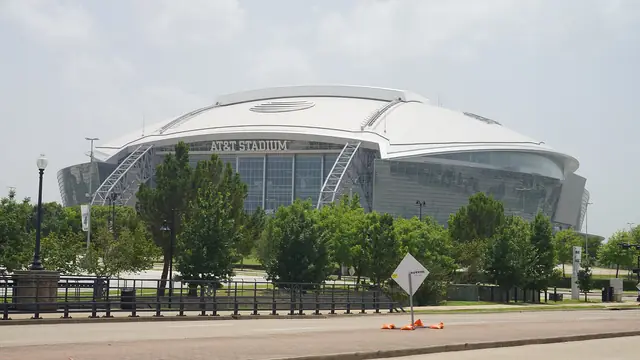
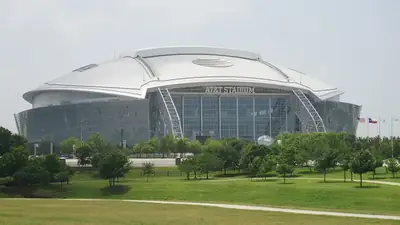
The Big 12 Championship Game ran from 1996 to 2010, went dark when membership dropped below 12, and returned in 2017 as a meeting of the two teams with the best league records. Its home is AT&T Stadium in Arlington, in the Dallas–Fort Worth area, on a deal that runs until 2030. Arizona State beat Iowa State in the 2024 game, and Texas Tech's 34–7 win over BYU in 2025 drew 85,519, a record for the event.
Seat strategy here differs from a campus game. AT&T Stadium has a retractable roof and far more capacity than any Big 12 campus, so the title game is frequently easier to get into than a top regular-season rivalry. The lower-level sideline between the 20s is the premium zone; the upper level sideline is a solid value because the building's video board fills in detail. Demand climbs when both schools are within driving range of Arlington and softens when both fan bases need flights.
Bowl tie-ins are signed in multi-year cycles, so treat these as the arrangement for the 2026 season only. The Alamo Bowl, Texas Bowl, Pop-Tarts Bowl and Liberty Bowl each take a Big 12 team, and the Independence Bowl lists the Big 12 as a partner. Teams selected for the College Football Playoff come out of that pool. College Bowl Games has the full postseason schedule.
Kansas City in March: sessions and arena seats
Plenty of fans think of the Big 12 as a basketball league first. The men's tournament has been held at Kansas City's T-Mobile Center (once called the Sprint Center) in 2008 and every year since 2010, and it is booked there until 2031. Kansas holds the most tournament titles, and Houston took the 2025 crown in only its second Big 12 season.
Tournament tickets are usually sold by session (one ticket admits you to a block of games, often two) or as a full-tournament package. The opening sessions are the easiest to buy. Demand piles up for the semifinals and final, especially when Kansas or Kansas State, with fans a short drive away, is still playing. If your team is a top seed, a package can pay off; otherwise, wait for the bracket and buy only the session your team plays in.
On campus, the same seat rule holds: sideline seats 10 to 20 rows up show both benches and the full floor. Seats behind the baskets cost less because depth on shots is hard to judge, and student sections in front of you tend to stand all game.
Donor points, student sections and resale
Every school runs its own ticket office. Season tickets go first, usually linked to a gift to the athletics fund that sets your seat location through a ranking often called priority points. Students get their own allotment, typically in a fixed student section. Single-game seats come later, and for the biggest games there may be few or none left once season-ticket holders and the visiting school have been served.
That is why most fans reach rivalry and top-25 games through resale. Prices there respond to the matchup, both records, the forecast and the kickoff slot. Reserved Seat backs every order with a 100% guarantee. Before you buy, read Are Resale Tickets Legit? and How Mobile Ticket Transfer Works.
Expect a clear-bag policy (bags must be transparent plastic, vinyl or PVC) at most stadiums; check each school's current rule before game day. Schedules, standings and championship details are posted at big12sports.com.
Frequently asked questions
Where should I sit at a Big 12 football game?
The sideline between the 30-yard lines, 15 or more rows up, gives the best overall view. For early-season day games, pick the side that keeps the sun behind you, often the west stands in a north-south stadium.
Is the Big 12 Championship Game easier to get into than a rivalry game?
Often, yes. AT&T Stadium holds far more fans than any Big 12 campus stadium, so supply is larger, though a matchup between two schools near Arlington can still push demand up.
How are Big 12 basketball tournament tickets sold?
Usually by session, with one ticket covering a block of games, or as a package for the whole event at T-Mobile Center in Kansas City. The semifinal and final sessions draw the most demand.
Which schools make up the Big 12 in 2025–26?
Sixteen: Arizona, Arizona State, Baylor, BYU, Cincinnati, Colorado, Houston, Iowa State, Kansas, Kansas State, Oklahoma State, TCU, Texas Tech, UCF, Utah and West Virginia.
Did Texas and Oklahoma leave the Big 12?
Yes. Both moved to the SEC in 2024, the same year Arizona, Arizona State, Colorado and Utah came in from the Pac-12.