

Upcoming Kansas City Chiefs dates
Dates and live ticket listings appear here as soon as they are on sale. The guide below covers what to know before you buy.
The Seat Call, Up Front
The strongest all-around Kansas City Chiefs ticket is a lower-bowl sideline seat in rows 20 through 30, near midfield, at GEHA Field at Arrowhead Stadium. The gentle rise of the lower bowl means those middle rows see over the players and staff who crowd the sideline, something the first ten rows cannot do. If you want to spend less, Arrowhead's steep upper deck is the best value in the building. If you want shade for an early-season day game, sit on the west side.
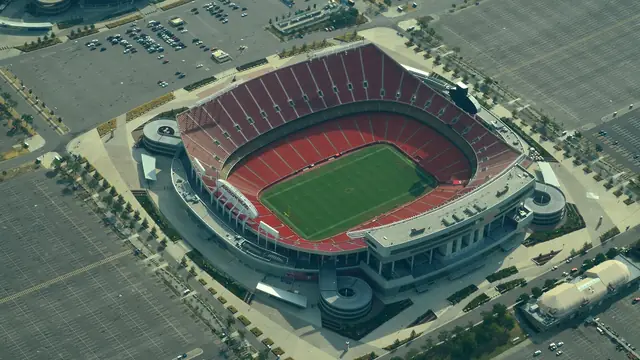
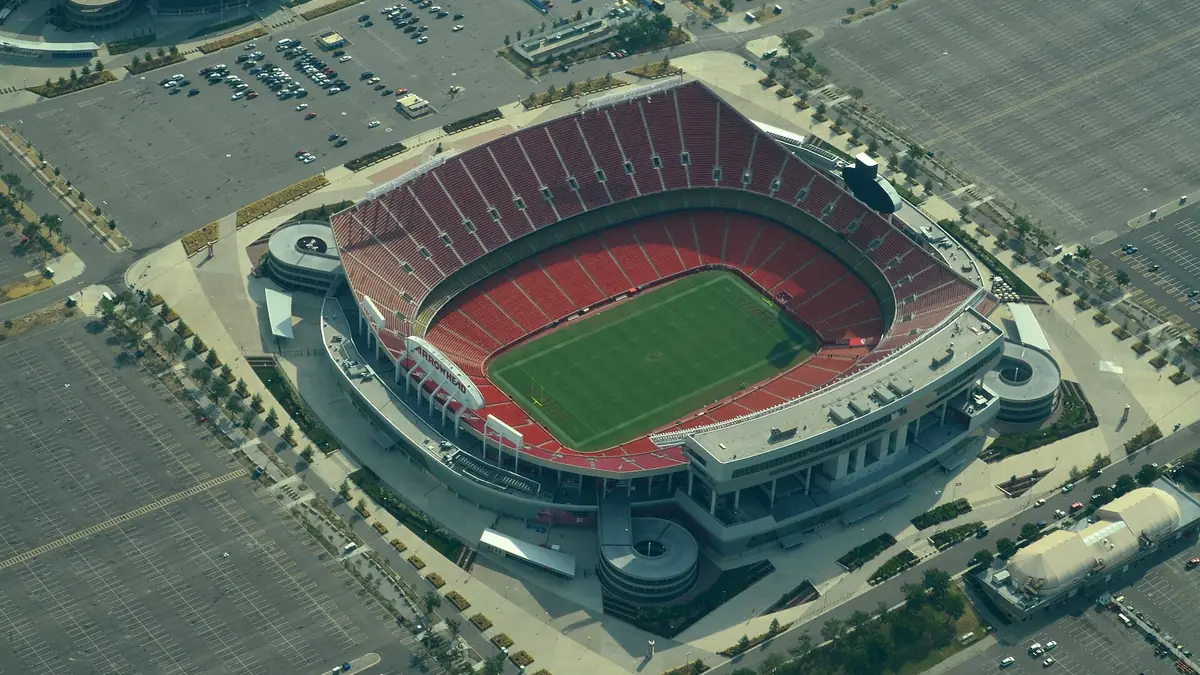
Arrowhead seats 76,416 and has no roof. Chiefs tickets rarely sell at face value, so most fans buy on the resale market, where AFC West rivals, night kickoffs and the postseason push demand highest. The regular season runs from September into early January, with preseason in August.
How Arrowhead's Three Tiers Stack Up
Arrowhead is organized into three tiers. Section locations below come from third-party seating guides, so use them for orientation and confirm against the seat map at purchase.
- 100 level (lower bowl). Midfield on the home (west) side falls around sections 118 through 120, where the Chiefs bench sits. The visiting bench is opposite, close to sections 101, 102 and 136. Sections 108 through 112 and 127 through 130 cover the two end zones, give or take a section.
- 200 level (club and mezzanine). Includes the CommunityAmerica club seats. You get a clean overhead view and indoor access, and you pay extra for both.
- 300 level (upper deck). Unusually steep, a pitch that current accessibility codes would not permit in a new building. That rake pulls even the top rows nearer to the field than at most stadiums.
Seats Worth Buying, Seats Worth Skipping
Buy
- Lower sideline, rows 20 to 30. Close, high enough, and clear of sideline traffic.
- Upper sideline, 300 level. A full view at a lower price, helped by the steep rake.
- Club level, near midfield. The comfortable option for a cold night or a hot afternoon.
- Lower end zones, if you want noise. Touchdowns happen in front of you, among the rowdiest home fans.
Skip
- The first ten rows of the lower sideline, unless proximity outranks sightlines for you. The sideline crowd of players and coaches hides the near hashes.
- Upper-deck seats for anyone with mobility concerns. The climb is long and steep.
- Low end zone rows if you care about yardage. Judging plays near midfield is hard from down there.
Shade in September, Sun in December
According to shade-mapping guides, the home (west) sideline is the first to lose the sun during afternoon games. The east side, behind the visiting bench, stays bright longer, and the north end zone stays exposed nearly all afternoon.
That advice reverses as the season goes on. In September, a shaded west-side seat is the comfortable choice. In December, shade means cold, and an east-side seat in full sun can make a day game far more pleasant. Match the side to the month, not just to the view.
Which Home Games Go First
A home season usually includes a preseason game or two, eight or nine games that count and, in good years, home playoff games in January.
- Las Vegas Raiders. The oldest and most heated AFC West rivalry, with large visiting crowds.
- Denver Broncos. Another long-running division series that lifts demand.
- Los Angeles Chargers. The third division opponent, a regular part of every home slate.
- Prime-time and holiday games. National attention means these dates tend to move first.
- Rematches. Opponents from recent playoff games or the Super Bowl carry extra interest.
- Playoffs. Sales open with little warning, and resale prices jump as soon as a home date is confirmed.
Preseason and early non-division games are usually the easiest way in. Cold forecasts trim demand a little late in the year, but less at Arrowhead than at most cold-weather stadiums, so buy early for division and night games.
Parking, Tailgating and the Gates
A Chiefs Sunday starts in the parking lot, where smokers and grills go to work long before the opening kick. The stadium's game-day rules, as published for 2026:
- buy your parking pass ahead of time, since booths take no cash; lots open four and a half hours out;
- only ticket holders may tailgate, and the lots must clear at kickoff;
- stadium gates open two hours out, and club gates thirty minutes earlier than that;
- entry is by phone ticket only, and every stand is card or mobile pay;
- bags must be clear, no bigger than 12 by 6 by 12 inches (a one-gallon clear plastic bag also works), and a clutch of roughly 4.5 by 6.5 inches may come along.
Arrowhead is part of the Truman Sports Complex east of downtown, beside the Royals' Kauffman Stadium, and it is designed around the car. If you use a rideshare, the drop-off point is the Missouri Welcome Center on Blue Ridge Cutoff, which sits between Gates 1 and 2; for transit, RideKC runs the 47 Broadway route nearby. Leaving takes time. Read the Arrowhead guest guide, and confirm the current policy before game day.
Road Trips and Franchise Background
Chiefs fans follow the team well, and the three division road games come every year. Las Vegas is the simplest trip: Allegiant Stadium sits roughly a mile off the Strip. In Inglewood, Chargers home games at SoFi Stadium often draw so many visitors that Chiefs fans feel at home. Denver adds thin air, no roof and possible snow in late-season games. Every Reserved Seat order carries a 100% guarantee, a useful safeguard when the game is hundreds of miles away.
The club was one of the original American Football League teams (the AFL, absorbed into the NFL in 1970), created by Lamar Hunt in 1959. It took the field as the Dallas Texans in 1960 and relocated as the Kansas City Chiefs in 1963. AFL championships followed in 1962, 1966 and 1969, then Super Bowl IV over Minnesota in the last season before the merger. Decades later came three more: LIV against San Francisco, LVII against Philadelphia and LVIII, an overtime rematch with San Francisco.
Municipal Stadium was home for the first nine Kansas City seasons; Arrowhead, designed by Charles Deaton, opened in August 1972. Its crowd earned a Guinness World Record in 2014 when noise at a Monday Night Football game reached 142.2 decibels, a mark for outdoor stadiums. The building was renovated from 2007 to 2010, and the GEHA Field name arrived in 2021. The building's future is set: a December 2025 announcement put the next Chiefs stadium across the state line in Wyandotte County, Kansas, with a 2031 target, and Arrowhead is expected to come down afterward.
Frequently asked questions
Which rows are best in Arrowhead's lower bowl?
Aim for sideline rows roughly 20 through 30. They clear the bench area, while the first ten rows look straight into it.
Is the upper deck at Arrowhead too far away?
Not by NFL standards. The steep 300 level keeps even the back rows near the action, although getting up there takes effort.
Should I sit in the sun or the shade at a Chiefs game?
Early in the season, the shaded west side is more comfortable for afternoon games. In December, the sunnier east side can be the warmer choice.
Can I pay for parking at Arrowhead when I arrive?
No. Under the 2026 rules, you buy parking ahead of time; the booths take no cash, and lots open four and a half hours before kickoff.
How long will the Chiefs play at Arrowhead?
For now, Arrowhead is home. The team's planned replacement in Wyandotte County, Kansas, announced in December 2025, has a 2031 opening target.
Sources
- Wikipedia – Kansas City Chiefs
- Wikipedia – Arrowhead Stadium
- GEHA Field at Arrowhead Stadium – Know Before You Go
- GEHA Field at Arrowhead Stadium – Game Plan (parking and transportation)
- GEHA Field at Arrowhead Stadium – Clear Bag Policy
- SeatGeek – Chiefs fan guide (orientation only)
- Shaded Seats – Arrowhead sun and shade (orientation only)