

Upcoming MLB Opening Day dates
Dates and live ticket listings appear here as soon as they are on sale. The guide below covers what to know before you buy.
Home opener seats, chosen fast
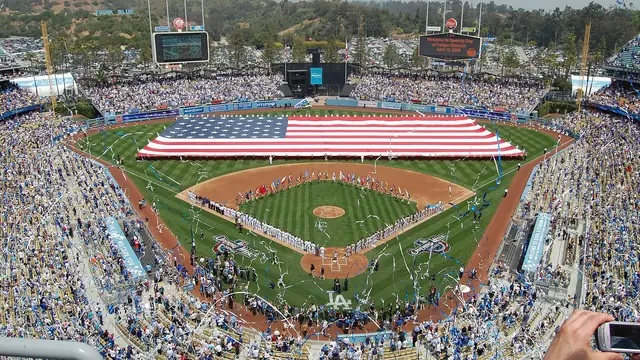
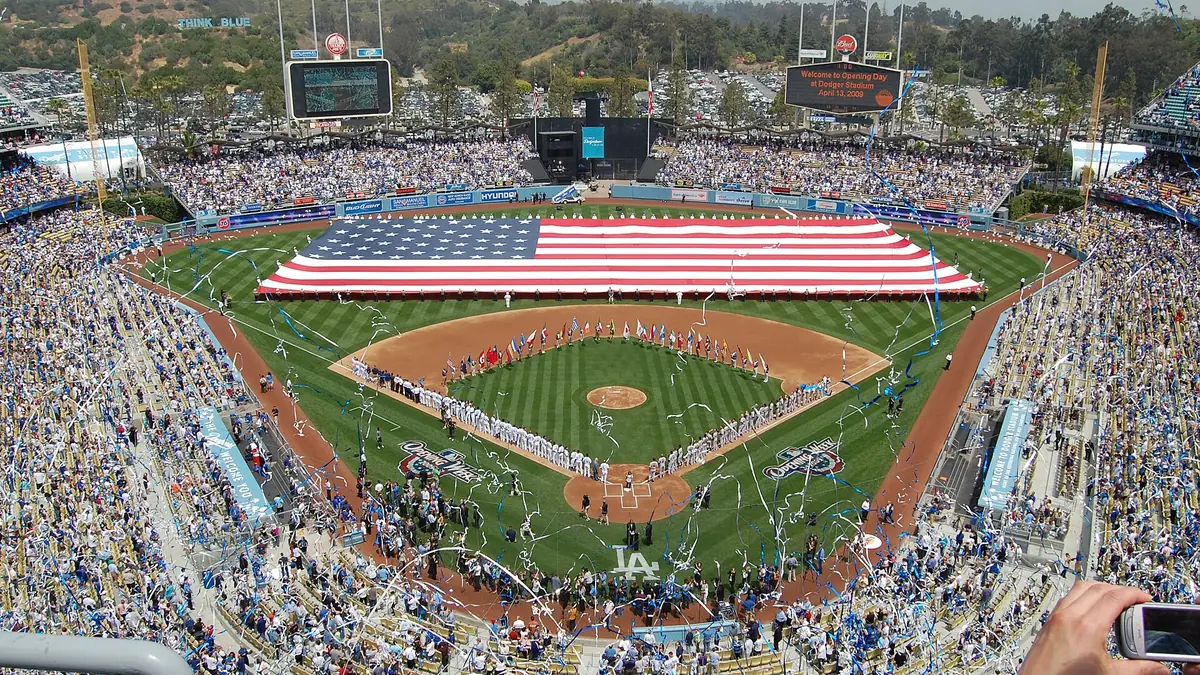
At a home opener, most of what you came for happens before the first pitch, so choose your seat for the pregame. The lower infield between the dugouts gives the best look at the introductions along the baselines. The upper deck behind home plate is the best angle for flyovers and the giant field flag, and it is a sound budget pick. In a cold-weather city, add one more filter: sit in the sun.
The date in question is the start of the Major League Baseball regular season, now set for the final Thursday in March. Until 2023 the season normally began during April's opening week.
Section-by-section view of opener ceremonies
- Lower infield: both teams line the first- and third-base lines for introductions, and these seats face them directly. They are the most contested seats of the day.
- Behind the home dugout: the pick for fans who want players close during introductions and warmups. Check which side is the home dugout at your ballpark before you buy.
- Upper deck behind the plate: flyovers, a field-sized flag and any on-field formation look best from up high, and the sightline down to the infield stays clean.
- Outfield and bleachers: loud and social, but you watch the introductions from a long way off and, at many parks, from an angle.
Whatever you buy, be inside when the gates open. Fans who arrive at first pitch miss the part of the day that makes it different.
Sun, cold and rainout risk in late March
For most clubs Opening Day is the coldest date of the year, and that should shape your seat choice.
- Northern open-air parks: expect a chilly, often gusty afternoon in Midwest and Northeast cities. Bring layers, a hat and gloves, and look for sun-facing seats, the opposite of what you want in July.
- Rain: early-season weather does postpone games. In 2018, two scheduled Opening Day games were rained out and played the next day. Know your ticket's rain policy.
- Domes, retractable roofs and warm cities: these remove most of the weather risk from an early-season date.
Each ballpark writes its own bag and mobile-ticket rules and revises them often; look them up shortly before game day.
Opening Day or your home opener?
These are not always the same game. MLB uses the name Opening Day only for the first day with multiple games, so a lone night game or an overseas series a few days earlier opens the season without counting as Opening Day. The home opener, meaning a club's first game at its own park, may come days or a week later, because roughly half the league starts on the road. Confirm the home date before you buy.
Recent seasons show how the start is staged:
- 2023: every team played on Thursday, March 30, the first time all clubs opened the same day since 1968.
- 2024: the Dodgers and Padres played in Seoul on March 20, and 28 teams opened on Thursday, March 28.
- 2025: the Dodgers and Cubs opened in Tokyo on March 18, and 26 teams started on Thursday, March 27.
- 2026: the Yankees visited the Giants on March 25, followed by 11 games on March 26 and three on March 27.
The 2027 date had not been set in the sources checked, and the current labor agreement between owners and players expires December 1, 2026, so the 2027 schedule depends on a new deal.
What pushes home opener demand
- Everyone is introduced. It is the only regular-season game where both full rosters, the coaches and clubhouse staff are announced. Other nights, only the starting lineups and managers are.
- The ace usually pitches. Managers give the Opening Day start to their best pitcher, and the assignment is treated as an honor.
- Guests and ceremony: retired players, local celebrities, media personalities and dignitaries often appear, and some teams have a broadcaster emcee the pregame.
- A weekday afternoon: many clubs play the opener on a weekday afternoon, long the classic excuse to skip work or school.
Season-ticket holders claim much of the supply, so the public buys mostly through team presales and resale. The opener commands more than the games after it. Games two and three of that first homestand, frequently the same week and the same visitors, are easier to land and may be the smarter buy if ceremony is not the point. Every Reserved Seat order is backed by a 100% guarantee.
Cincinnati, presidents and other first-pitch traditions
Cincinnati, home of baseball's first all-professional team, is where the season traditionally began, and for many years the big leagues threw their first pitch of the year there. Even now the Reds are the only club scheduled to open every season at home; the only seasons since 1900 that broke the pattern were 1966 (rain washed out the opener) and 1990 and 2022 (lockouts reshaped the schedule). The Findlay Market Parade makes the day an unofficial city holiday, and a Reds home opener is the most traditional version of the occasion.
Twelve U.S. presidents have thrown a season's ceremonial first pitch, a custom William Howard Taft started on April 14, 1910, when the Washington Senators opened at home. In 1994 Bill Clinton helped open Cleveland's then-new ballpark with one, and on March 30, 2008, George W. Bush threw out the first pitch at the first game at Nationals Park.
Opening Day firsts and records
- 1940: Cleveland's Bob Feller no-hit the White Sox, still the only Opening Day no-hitter.
- 1950: the St. Louis Cardinals hosted the first home opener played at night.
- 1974: Hank Aaron hit career home run 714 in Cincinnati, tying Babe Ruth.
- 2012: Toronto outlasted Cleveland in 16 innings, the longest opener on record.
- 2018: Matt Davidson of the White Sox homered three times at Kansas City.
Tom Seaver made a record 16 Opening Day starts. Houston put together 10 consecutive Opening Day wins between 2013 and 2022, tying a mark set in the 1880s and 1890s. The season runs 162 games, 81 at home, from late March into late September or early October; for the next big date on the calendar, see the MLB All-Star Game.
Frequently asked questions
Where should I sit to see Opening Day introductions?
In the lower infield between the dugouts, which faces the first- and third-base lines where players stand during introductions. The upper deck behind home plate is best for flyovers.
What day of the week is Opening Day?
A Thursday: the last one in March, under the format used since 2023. A few clubs may start earlier with a single game or a series abroad.
Why might my team's first home game come later?
About half the league opens on the road, so a team's home opener can fall several days to a week after Opening Day.
Are the games after the home opener easier to get?
Usually. The second and third games of the opening homestand draw less demand, often against the same opponent in the same week.
Why do the Reds always open at home?
Cincinnati was home to the first all-professional team, and for decades the season's first pitch was thrown there. The Reds remain the only team always scheduled to open at home.
How should I dress for a March game?
At open-air ballparks in cooler cities, wear layers with a hat and gloves, and favor seats in the sun.