

Upcoming Toronto Maple Leafs dates
Dates and live ticket listings appear here as soon as they are on sale. The guide below covers what to know before you buy.
The Leafs seat that earns its price
At a Toronto Maple Leafs game, the two seats with the best full-rink view are section 119, in the middle of the bench side, and section 108, directly opposite. Sit in rows 15 to 25, which RateYourSeats calls the ideal height, and you clear the glass without losing the feel of the game. Hockey capacity is 18,819.
- Behind a goal: sections 113 and 114, where TickPick places the Leafs' two-period net.
- Realistic value: front rows of 308–310 or 320–322 upstairs.
- Look twice at: front rows in premium sections, where glass gets in the way, and seats right behind the benches.
- Skip: the upper corners.
Row 3 is the front row: how the 100s and 300s work
Scotiabank Arena, at 40 Bay Street, has two main public tiers. The 100 level is the lower bowl; the 300 level is the upper bowl. Between and above them are suites, private party spaces and premium clubs.
- Rows: a typical lower sideline section is 28 rows deep.
- Front row: in the hockey setup, seating typically begins at row 3, so a row 3 ticket is at the glass.
- Benches: per TickPick, Toronto's bench straddles 119/120 and the visitors' straddles 118/119; RateYourSeats puts the scorer's table at 119.
Seats directly behind the benches look close on a map, but standing players and staff block parts of the ice. A few sections over, or higher up, is the better buy. With standing room, attendance can reach about 20,270.
Sections 113–114 and the Leafs' shooting end
In the first and third periods, the home team attacks the same net. Only TickPick names it: the goal below sections 113–114. Sitting there means Leafs rushes come toward you for two of three periods. With a single source, double-check the listing's map and watch which goal Toronto warms up at.
How low to go
Down low, you are level with the players when they fight for the puck along the boards. They also put the glass between you and the far end. TickPick flags the glass as a problem in front rows of the premium sections, and RateYourSeats suggests rows 15 to 25 as the height that balances closeness and a clean view.
Upper-bowl buys: 308–310 and 320–322
For many fans, upstairs is where a Leafs ticket is actually attainable, and the view holds up. Hockey rewards height, and from the upper sidelines you see systems, line changes and passing lanes clearly.
On TickPick's reading, the strongest value anywhere in the arena is the first few rows of sideline sections 308–310 and 320–322. Corner sections up top are cheaper for a reason: you see jersey numbers, not faces, and plays at the far net get hard to read.
If you have to choose between a high lower-bowl seat behind a net and a low 300-level seat at center, the center seat usually shows more hockey.
Habs, Sens, Bruins: the hardest nights
In Canada's biggest city, Leafs home games stay in demand all season; finding seats at face value is rare. From 2026–27, NHL teams play 84 regular-season games, 42 at home, after a four-game September preseason, with the 2026–27 season running September 29, 2026, to April 10, 2027.
- Montreal Canadiens: hockey's oldest rivalry, and a near-certain sellout.
- Ottawa Senators: the provincial rivalry, renewed when Toronto beat Ottawa in round one in 2025.
- Boston Bruins: three first-round exits at Boston's hands, in 2018, 2019 and 2024, keep this one raw.
- Buffalo and Detroit: longtime rivals within driving distance.
- Saturdays, holiday weeks, opening night and the playoffs: the top of the demand curve.
Listings are mostly resale and move with the opponent, the night and the standings. The most attainable seats are usually weeknights against Western Conference teams making their one visit.
Union Station, the PATH and the border
You can walk indoors from Union Station to the arena. The station handles:
- The TTC subway: Line 1, Yonge–University.
- GO Transit: commuter trains from across the region.
- Via Rail: trains between cities.
- UP Express: the airport train from Pearson.
PATH, the city's underground walkway system, ties the building to a large part of the core, a real advantage in January. Driving in at game time crawls, and waterfront lots fill fast.
As of 2025–26, entry around the league is generally by phone and bag sizes are capped; read the arena's posted bag rules before you leave. Fans coming by car from Buffalo, Detroit or other U.S. cities need a passport or another accepted travel document, and prices in Toronto are in Canadian dollars. A 100% guarantee covers every Reserved Seat order. The schedule is on the Maple Leafs team site.
Maple Leaf Square and the concourse bars
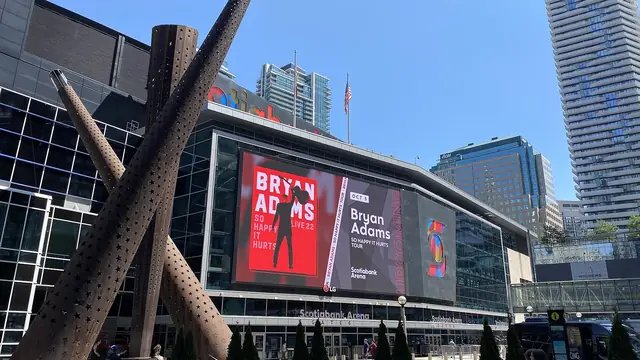
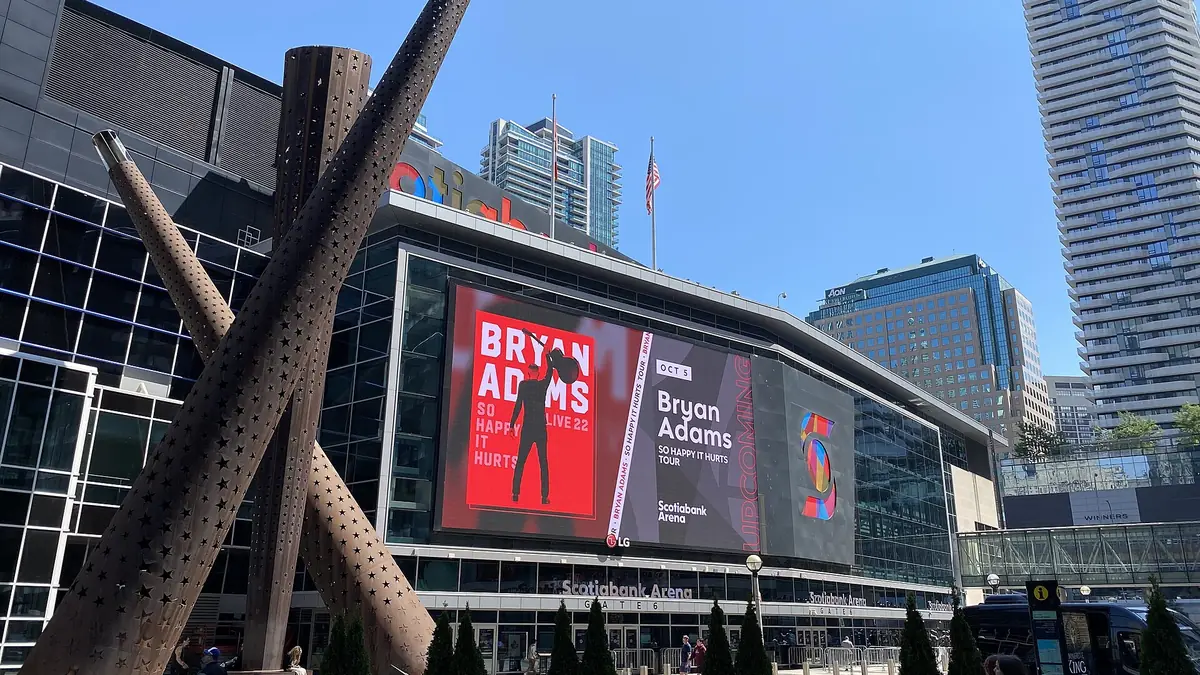
Outside the doors is Maple Leaf Square, a 2010 complex of restaurants, a public plaza and large screens. On home-opener and playoff nights, around 5,000 people pack the plaza to watch outdoors, a way to share the atmosphere without a ticket. Bars and restaurants around Union Station fill early on Saturdays.
Inside, TickPick notes several named bars on both main concourses, by sections 111, 116, 119 and 324, which work well as pregame meeting spots.
Gardens years, the 1967 Cup and the wait since
Toronto's franchise played as the Arenas from 1917, as the St. Patricks from 1919, and as the Maple Leafs from 1927, when Conn Smythe took over. From 1942 to 1967 it was one of only six NHL teams, the Original Six. Only Montreal has more than its 13 Cups, which break down as the Arenas' 1918 title, the St. Pats' 1922 win and 11 under the Leafs name from 1932 through 1967.
- 1931 to 1999: the Carlton Street years at Maple Leaf Gardens, where every Leafs-era Cup was won.
- 1960s: four titles in a six-year stretch, ending in 1967, the last season before expansion doubled the league.
- February 1999: the move to Bay Street, into a building that wraps the 1941 postal delivery building and first carried Air Canada's name.
- July 1, 2018: renamed Scotiabank Arena under a 20-year agreement.
- October 2023: MLSE, the company behind both the Leafs and the Raptors, unveils a multi-phase renovation with larger concourses and new concessions.
- 2023 and 2025: second-round playoff runs.
Toronto's Cup drought since 1967 is the longest in the league, which goes a long way toward explaining the intensity of the crowd.
Frequently asked questions
What is the best section for a Leafs game?
Section 119 on the bench side or section 108 across from it, both at center ice. Rows 15 to 25 give the cleanest view over the glass.
Why does my Leafs ticket start at row 3?
In the hockey layout, the lower bowl's seating usually starts at row 3, so row 3 is typically at the glass.
Which 300-level sections are the best value?
TickPick's picks are the first rows of the sideline sections 308–310 and 320–322.
Can I watch a Leafs playoff game outside the arena?
Yes. Maple Leaf Square, beside the arena, shows home openers and playoff games on a big screen for crowds of around 5,000.
Do I need a passport to drive to a Leafs game from the U.S.?
Yes. Fans crossing from Buffalo, Detroit or elsewhere need a passport or another accepted travel document.
When did the Maple Leafs last win the Stanley Cup?
In 1967. The club has won 13 Cups in all, counting the 1918 Arenas and 1922 St. Patricks.
Sources
- Wikipedia – Toronto Maple Leafs
- Wikipedia – List of Toronto Maple Leafs seasons
- Wikipedia – Scotiabank Arena
- TickPick – Toronto Maple Leafs seating chart
- RateYourSeats – Scotiabank Arena section 119
- NHL – Toronto Maple Leafs
- Wikipedia – Maple Leaf Square
- Wikipedia – Union Station (Toronto)
- Wikipedia – 2026–27 NHL season