

Upcoming Washington Capitals dates
Dates and live ticket listings appear here as soon as they are on sale. The guide below covers what to know before you buy.
Capitals seat pick: begin at the red line, then move up ten rows
For most fans, the right Washington Capitals ticket is a 100-level seat near center ice at Capital One Arena, about ten rows or more above the glass. That spot shows the whole sheet, keeps you close to the benches and avoids the distortion of the front rows. If center ice is out of reach, the next smart move is the lower bowl at the 105–106 end, where Washington attacks for two of the three periods.
The arena holds 18,573 for hockey and stacks into three main levels: the 100 level (the lower bowl), the 200 level (club seating) and the 400 level (the upper bowl). Each one trades distance for comfort or cost in a different way, and the sections below show where those trade-offs land.
Reading the 100 level: benches, boxes and the attack end
The lower bowl runs from section 100 to section 121. Seat maps show the Capitals bench between sections 100 and 121 and the visiting bench between sections 100 and 101, so section 100 sits right behind both benches. The sections along the red line (the center line on the ice) are 100, 101, 110, 111, 112 and 121, and they draw the heaviest demand all season.
- Behind the benches. You hear line changes and coaching chatter, and you watch players up close. The trade-off is that bench glass and standing players can cut into the view from the lowest rows.
- The 105–106 end. Washington shoots twice at the net in front of these sections and once at the net in front of 116 and 117. A seat here puts the Capitals' power play and offensive-zone time right in front of you for two periods, usually at a lower cost than the red line.
- Beside the penalty boxes. Both boxes sit in front of section 111. Row 1 of sections 110 and 112 gives a close look at the boxes and the players in them.
Glass rows: closer than they are good
Rows 2 through 7 of the lower bowl look like prime seats on a chart. In practice, the glass (the clear barrier above the boards) bends the view, scuffs collect on it, and the far end of the ice is hard to follow. Directly behind the penalty boxes in section 111, the boxes and the people inside them block part of the play. If you want to watch the game rather than feel the hits, go higher.
Club seats and the 400s, weighed against each other
The 200 level (sections 200–229) is the arena's club tier. It sits higher than the lower bowl and gives a wider angle, so you can see breakouts, line changes and power-play setups develop across all three zones. Club amenities come with the ticket, which helps on a long night.
The 400 level is the least expensive part of the building. A center-ice 400-level seat is a sound budget choice for fans who like to watch systems and special teams, because the height turns the game into a diagram. The seats to avoid are the top rows behind either goal, where distance and angle work against you.
- Best view for the money: 400 level, center ice.
- Best mix of view and comfort: 200-level club at center ice.
- Best close-up of Washington's offense: lower bowl at the 105–106 end, row 10 or higher.
Capitals dates with the thinnest supply
The NHL calendar follows a set pattern: preseason games in late September, an 82-game regular season from October to mid-April with 41 home dates, then the playoffs from late April into June. The Capitals share Capital One Arena with the NBA's Washington Wizards, so hockey dates are spread around a crowded building schedule.
- Pittsburgh Penguins visits. A division rival a few hours away, Pittsburgh produces some of the tightest markets of the season.
- Philadelphia Flyers and New York Rangers games. Both fan bases can reach Washington by train, so visiting jerseys take up part of the building and supply drops.
- Saturdays and holiday weeks. These dates move faster than Monday-through-Wednesday games.
- Milestone and ceremony nights. A record chase or a jersey retirement pulls in casual fans, and resale prices climb quickly.
- Postseason games. Playoff tickets are the hardest in the city to find, and prices shift after every result.
If your goal is a lower-bowl seat at a reasonable cost, look at a weeknight game against a Western Conference club. Those dates usually carry the deepest inventory.
Gallery Place, the renovation and getting through the doors
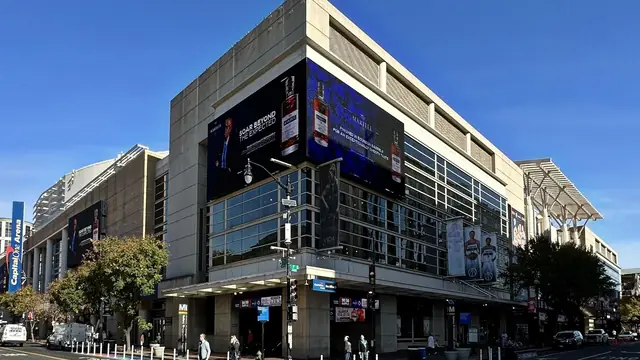
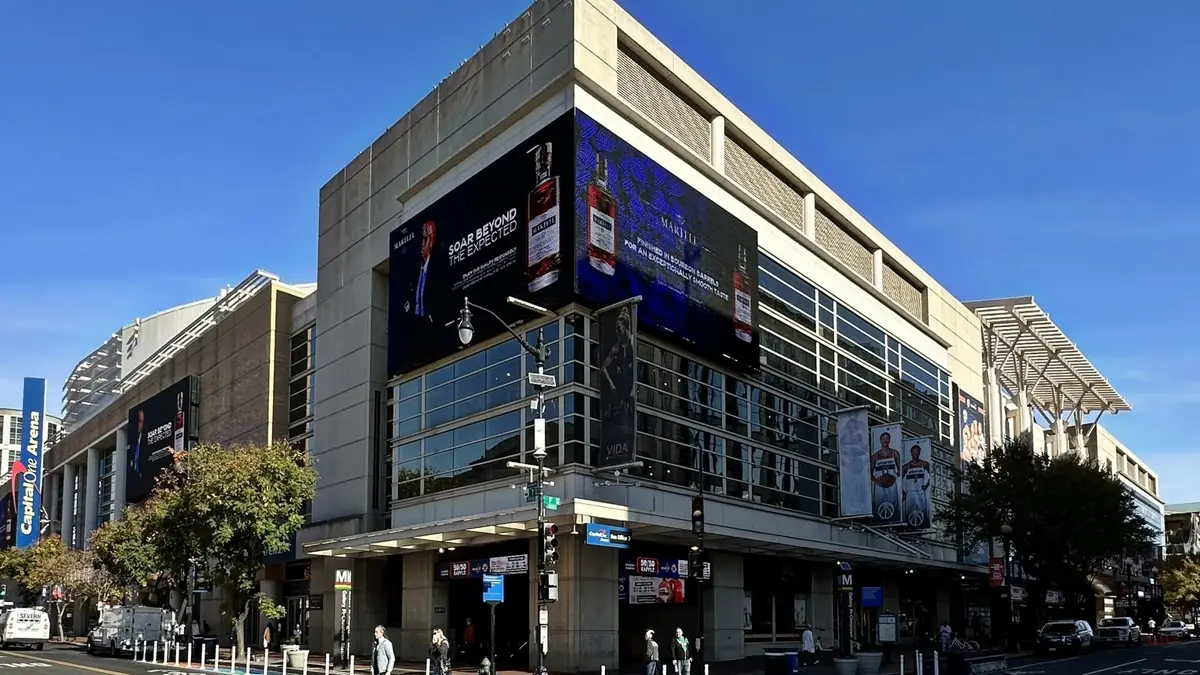
Capital One Arena stands at 601 F Street NW in the Chinatown and Penn Quarter neighborhood. Gallery Place–Chinatown station, on the Red, Green and Yellow lines, sits directly below it, which makes Metro the simplest way to arrive and the fastest way to leave. Driving works, but nearby garages fill early and downtown streets move slowly after the final horn.
A large renovation of the arena started in 2024, with completion targeted for the 2027–28 season. Entrances, concourses and food options may change from one visit to the next. As of the 2025–26 season, confirm bag size limits and entry rules at capitalonearena.com before you go.
Restaurants and bars line the surrounding blocks, so it is easy to eat before puck drop and walk over. Every Reserved Seat order carries a 100% guarantee.
Corridor road trips for Washington fans
The Metropolitan Division keeps a large share of Washington's road schedule on the Northeast Corridor. Philadelphia, Newark, New York and Pittsburgh are all a train ride or a short drive away, which makes a Flyers, Devils, Rangers or Penguins road game the easiest away trip to plan.
From 8–67–5 to the Cup and goal No. 895
The Capitals entered the NHL in 1974 as an expansion club, together with the Kansas City Scouts. The first season finished 8–67–5, with 21 points and a .131 winning percentage, still the lowest mark in league history. For more than two decades the team played at the Capital Centre in Landover, Maryland.
- 1997. The club moves downtown to the new arena, which opened on December 2, 1997, as MCI Center. It became Verizon Center in 2006 and Capital One Arena in 2017.
- 1998. Washington reaches its first Stanley Cup Final and is swept by the Detroit Red Wings.
- 2004. The Capitals draft Alex Ovechkin first overall.
- June 2018. Washington beats the Vegas Golden Knights in five games, winning Games 3 and 4 at home, for its first Stanley Cup. It is the city's first major professional title since the 1992 Super Bowl, and Ovechkin wins the Conn Smythe Trophy as playoff MVP.
- April 6, 2025. Ovechkin scores career goal 895, on the power play against the New York Islanders, and passes Wayne Gretzky as the NHL's all-time goal leader.
Ted Leonsis's Monumental Sports and Entertainment owns both the team and the arena. The club has retired numbers 5, 7, 11 and 32, and its mascot is Slapshot, a bald eagle. The team's schedule is posted at nhl.com/capitals.
Frequently asked questions
What is the best section for a first Capitals game?
A 100-level center-ice section such as 110, 111 or 112, about ten rows up, gives the most complete view. For a lower cost, try the lower bowl at the 105–106 end, where Washington shoots twice.
Are glass seats at Capital One Arena worth it?
Row 1 is a thrill, but rows 2 through 7 often suffer from glass distortion and a limited view of the far end. Most fans see more of the game from row 10 or higher.
How many seats does Capital One Arena have for hockey?
The arena seats 18,573 for Capitals games across the 100, 200 and 400 levels.
Which Metro station serves Capitals games?
Gallery Place–Chinatown, served by the Red, Green and Yellow lines, is directly beneath the arena.
Who did the Capitals beat to win the Stanley Cup?
Washington beat the Vegas Golden Knights in five games in June 2018 for the franchise's first championship.
Is construction affecting Capital One Arena?
A renovation began in 2024 with completion targeted for the 2027–28 season. Games go on, but entrances and amenities can change, so check the arena's website before your visit.